


 Top-Rated On Tripadvisor
 Trips for All Budgets
 Experience the real Morocco with expert guides
Grand Morocco tour of 20 days with a luxury camp – overview:
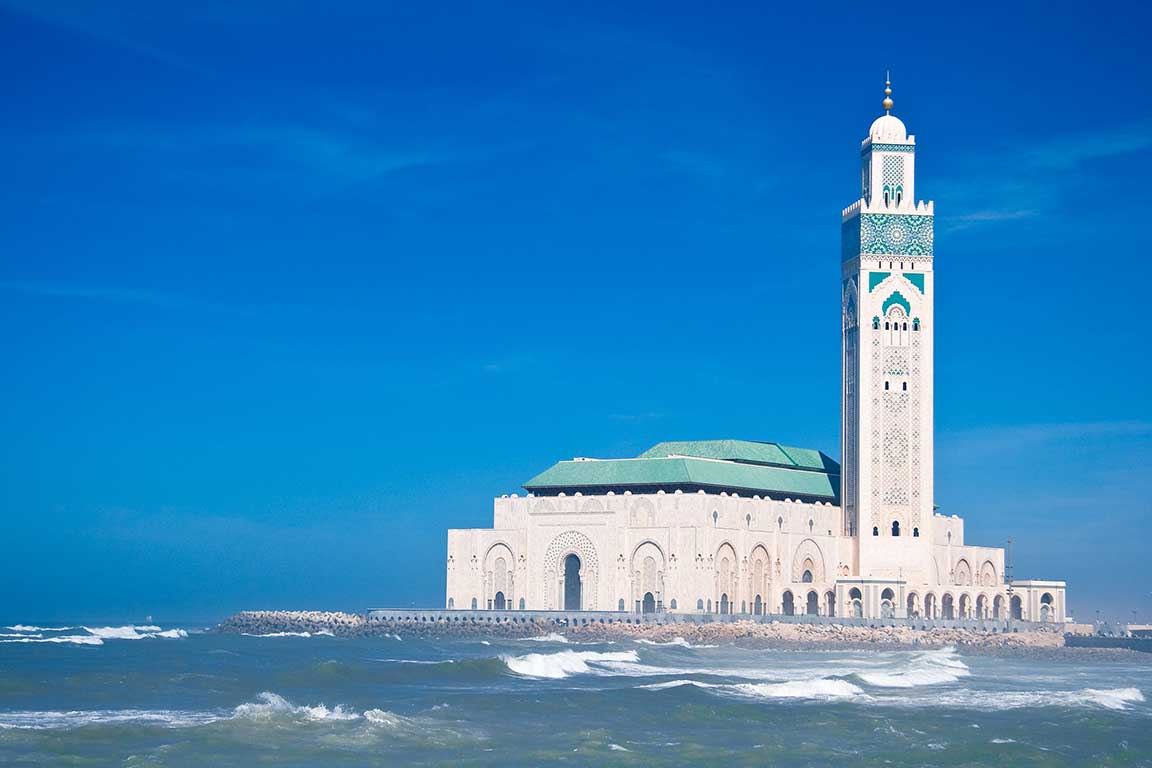
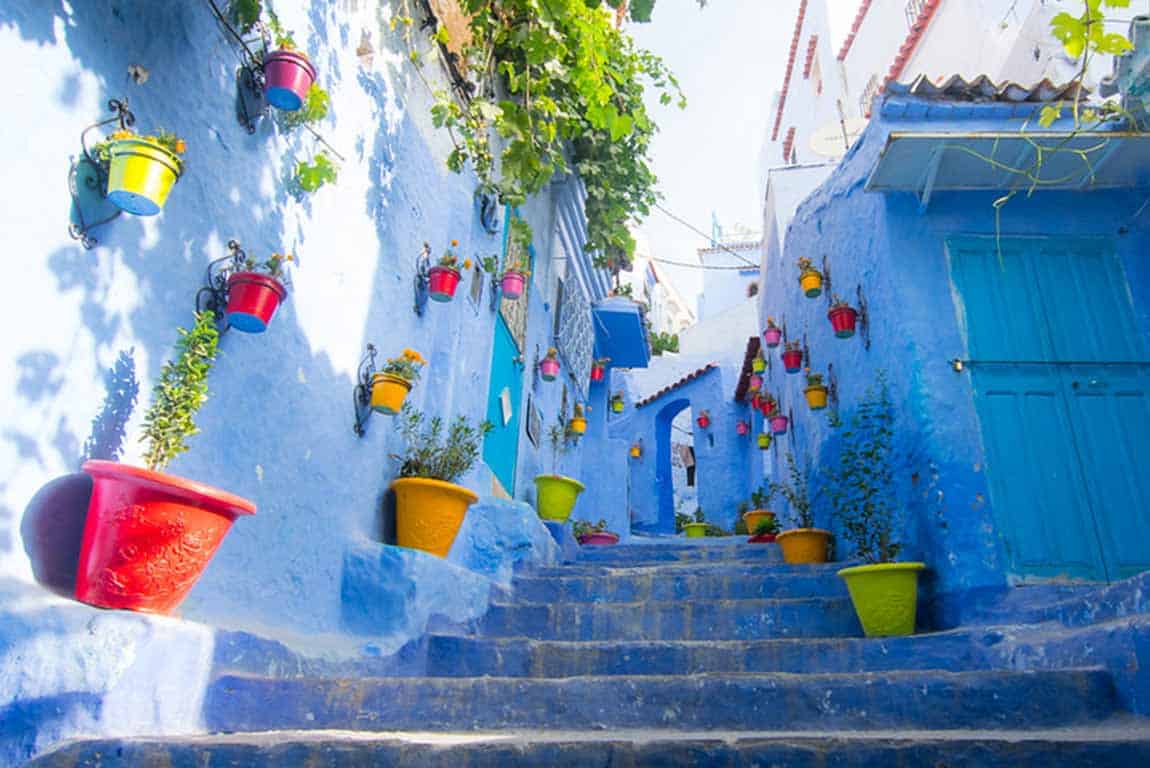
This immersive grand Morocco tour, starting from the vibrant city of Casablanca, offers a harmonious blend of exploration and relaxation, showcasing the enchanting beauty and rich culture of this North African country. Each destination unveils captivating sights, from the majestic Hassan II Mosque to the intricate designs of the Mohammed V Mausoleum in Rabat. The blue-painted alleyways of Chefchaouen and the vibrant murals of Asilah further enrich this unique Moroccan experience.
As the journey unfolds, you will delve into the past at the UNESCO World Heritage Site of Volubilis, with its ancient Roman ruins. In Fes, the fortified medina invites exploration, featuring majestic royal palaces and bustling souks brimming with exquisite handicrafts. The architectural marvel of Kasbah Aït ben Haddou adds to the historical tapestry of the tour, while the saffron-scented valleys of Taliouine and the coastal charm of Essaouira offer further delights.
The adventure culminates in the Sahara, where camel treks across the majestic dunes of Erg Chebbi and Erg Chegaga create unforgettable memories. Evenings spent dining under the stars, accompanied by Berber music, provide a unique cultural immersion. Throughout the journey, Morocco’s diverse landscapes – from the High Atlas mountains to the breathtaking gorges of Dades and Toudgha and the Atlantic coast – promise a captivating experience that lingers long after the tour comes to an end.
Grand Morocco tour & luxury desert camps 20 days – highlights:
- Visiting the awe-inspiring Hassan II Mosque in Casablanca, renowned as one of the largest mosques in the world
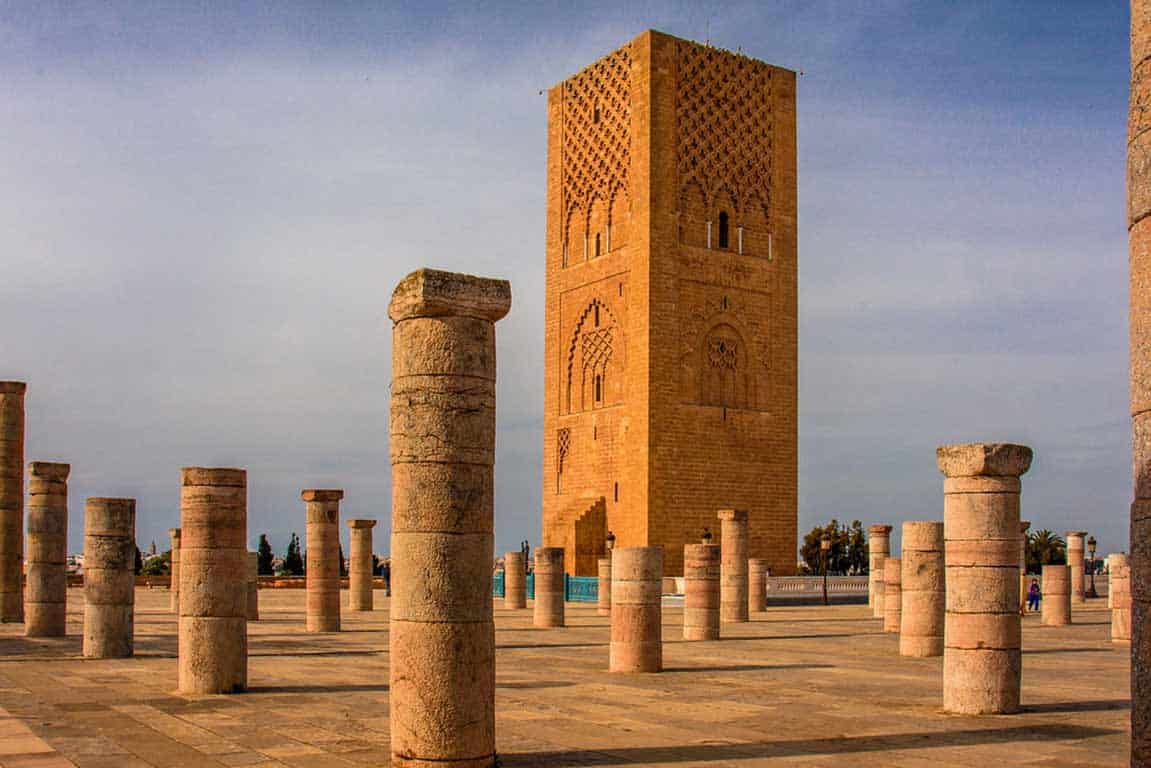
- Exploring Rabat’s landmarks; the iconic Hassan Tower, the Mausoleum of Mohammed V, and Chellah ancient ruins
- Discovering the charming town of Chefchaouen and the UNESCO World Heritage Site, Volubilis Roman ruins
- Wandering through the vibrant souks, exotic medinas, and stunning palaces and madrassahs of Fes and Marrakech
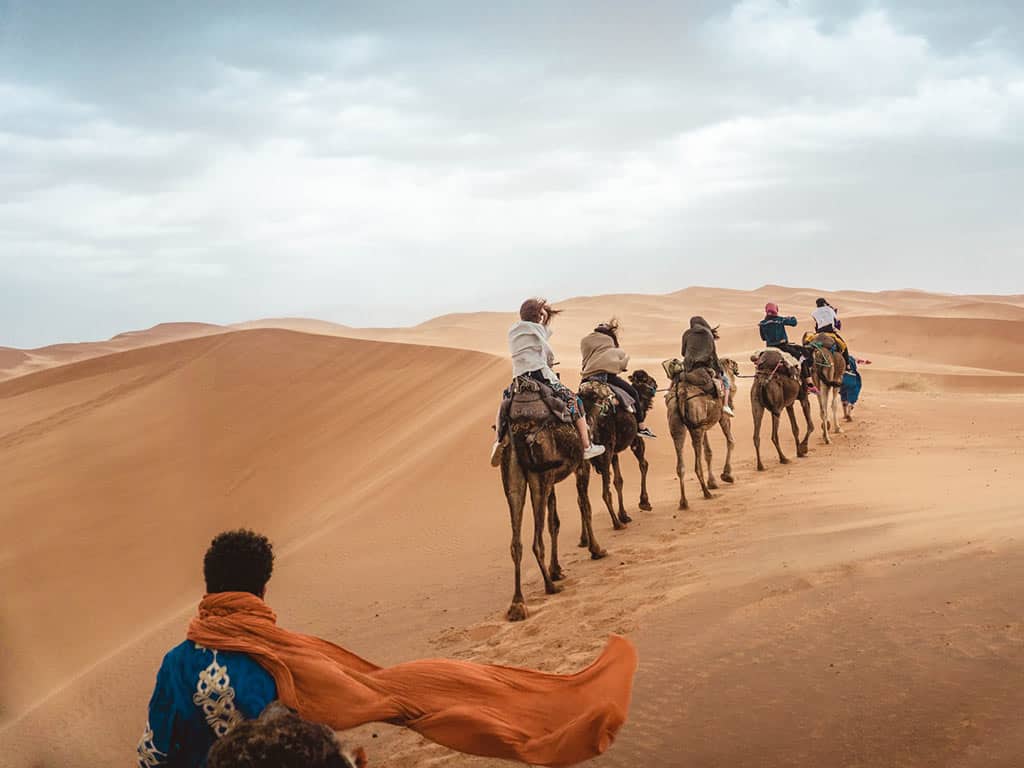
- Enjoying a camel ride through the Erg Chebbi dunes, reaching a luxury camp in time to witness the desert sunset
- A traditional dinner beneath a starlit sky, followed by an evening of Berber music and drumming around the campfire
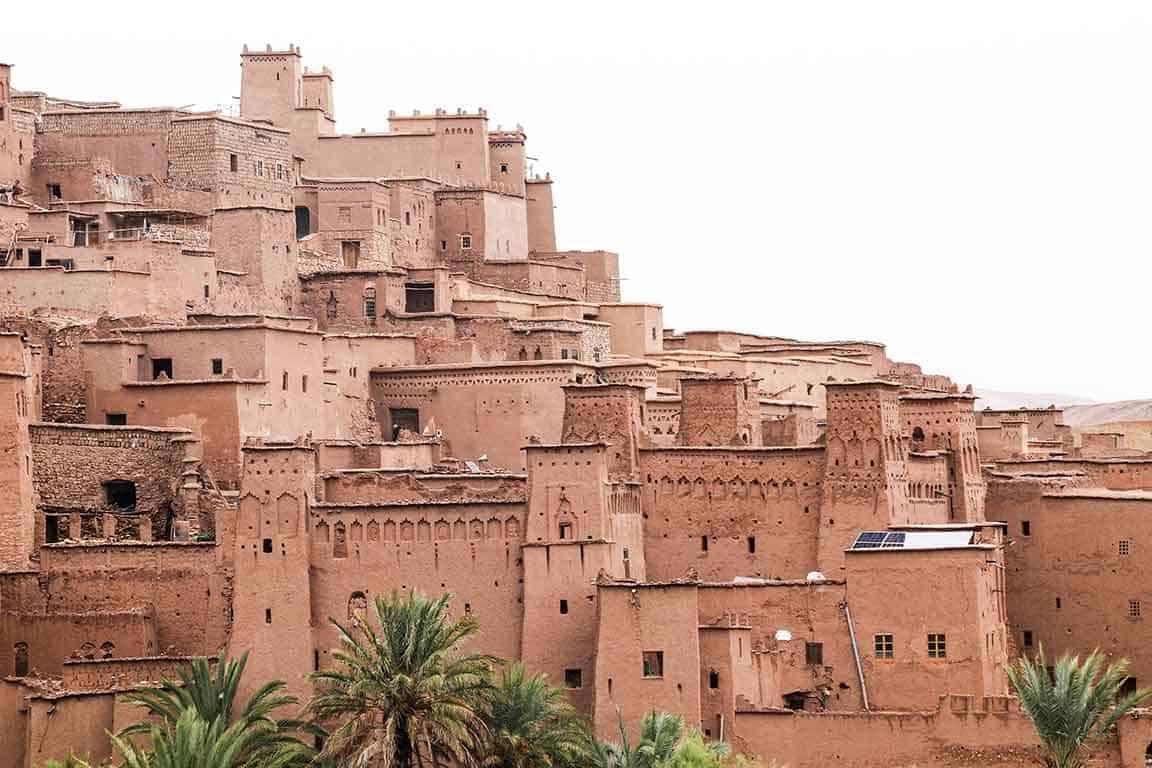
- Admiring Morocco’s famous kasbahs; the UNESCO-listed Ksar Aït Ben Haddou, as well as Telouet and Amredhil
- Exploring the coastal charm of Essaouira, featuring its historic port, vibrant medina, and opportunities for surfing
What is included:
- Transport in a private air-conditioned vehicle; 4×4 Toyota Prado TX or deluxe van and fuel
- Pick-up from and drop-off at your hotel or riad and transfer from and to the airport
- Experienced local English/French/Spanish/Italian-speaking Berber and nomad driver-guide
- Accommodation in air-conditioned rooms/suites with private bathroom
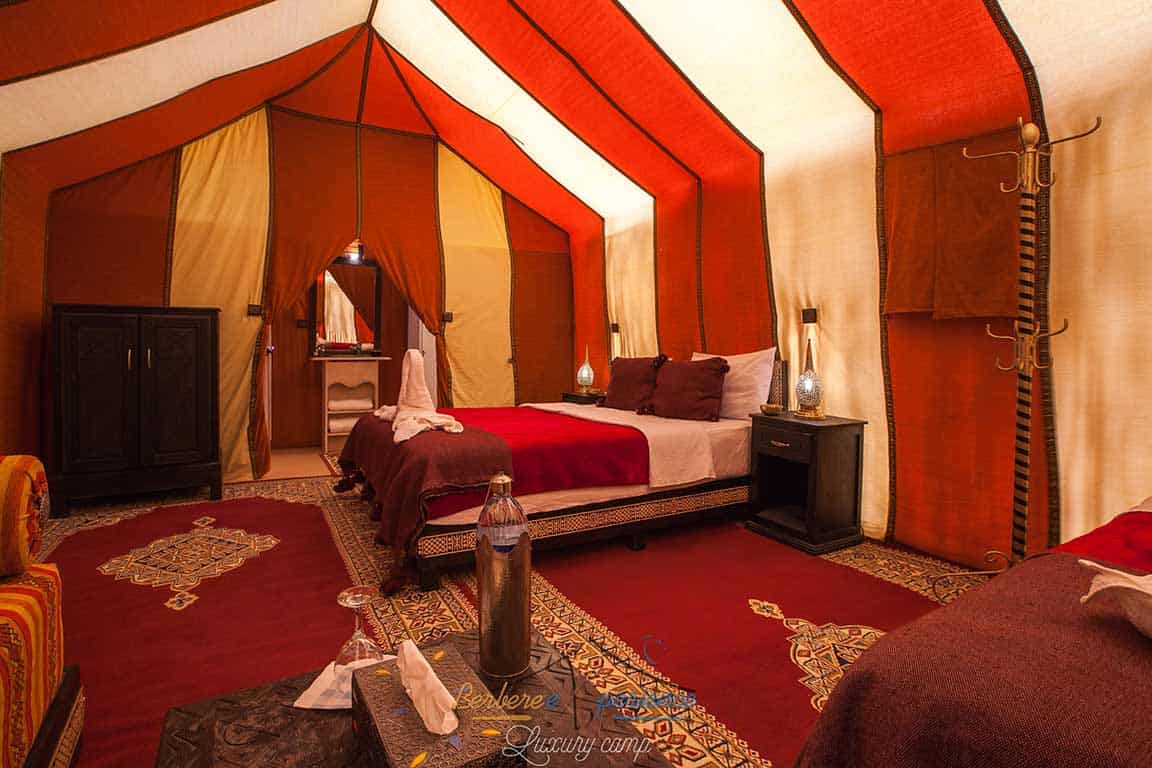
- Two nights in a luxury camp in Erg Chebbi with a private toilet and shower, lamps, plenty of space, and traditional handicraft furnishings
- All meals (except lunch and dinner in Rabat, Fes, Marrakech, Chefchaouen, Essaouira and the journeys in between) – with a vegetarian and vegan option available
- A camel ride with a guide. And if you wish to do some sandboarding, just speak to the camp staff!
- Option to go to and return from the camp by 4×4
- Luggage service to the camp and all accommodation
- Berber drumming and music
- Free time to explore sites of interest, for walks, photos, and tea/coffee breaks
- The opportunity to ask the driver to stop when and where you wish
- Entrance fees (except in Casablanca, Rabat, Chefchaouen, Essaouira, Fes, and Marrakech)
- Sightseeing with local tour guides in Fes and Marrakech
- Local guides in the relevant places
- Tea, coffee and mineral water in the desert
What is not included:
- Lunch and dinner in Casablanca, Rabat, Chefchaouen, Fes, Essaouira, and Marrakech, and the journeys between the cities
- Entrance fees in Casablanca, Rabat, Chefchaouen, Fes, Essaouira, and Marrakech, and the journeys between the cities
- Drinks
- Tips
- Extras
Good to know on this Morocco luxury desert camp tour 20 days:
- Guided tours of the Hassan II mosque are limited on Fridays or religious holidays. Please check the schedule here: Hassan II Mosque Tours and Tickets
- You can buy entry tickets at each monument during your guided tour of Marrakech, but Majorelle Garden tickets must be booked online in advance.
- According to weather conditions from May to the end of September, it may be necessary to take the alternative for the second day in the dunes
- This Morocco desert tour from Casablanca can be customised to accommodate your interests
- It is possible to start and/or end this desert tour from Marrakech instead of Casablanca
- You can always consult your driver about skipping some places to spend more time elsewhere
- Here is a downloadable packing list to help plan for your Moroccan desert tour
- We require a 30% deposit of the total price to book the car, while the balance is payable to us in the office in Ouarzazate
- We accept payment through PayPal, bank transfers in Europe, by credit card, or cash (USD, Euro, GBP, or MAD)
- We offer a 25% discount for children under 12, and one child under 3 per family travels free of charge
- These prices are liable to fluctuation according to the current exchange rate
- Our prices can be subject to an increase over the busy season, and, in particular, the Christmas and New Year’s Eve period
Prices per person
| No Days | Meals |
|---|---|
| All-inclusive | |
| Total price | |
| 2 Persons |
|---|
| 3425 € * |
| 6850 € * |
| 3 Persons |
|---|
| 3325 € * |
| 8875 € * |
| 4 Persons |
|---|
| 3225 € * |
| 12,900 € * |
| 5 Persons |
|---|
| 3125 € * |
| 15,625 € * |
| 6 Persons |
|---|
| 3125 € * |
| 18,750 € * |
Grand Morocco tour & luxury desert camps 20 days – itinerary:
1st day: Casablanca – Rabat
Upon arrival at the airport in Casablanca, our driver will greet you and escort you through the stunning Moroccan countryside to the city in an air-conditioned vehicle. Welcome to Morocco!
Once in the city centre, there is an opportunity to visit the iconic Hassan II Mosque, the largest mosque in Africa and the tallest religious building in the world. This remarkable structure is notable for its unique location, built entirely over the ocean, and is adorned with exquisite tiling and exceptional craftsmanship. Due to the high number of visitors, waiting times at the ticket office may be expected. A tour of this imposing building typically lasts about one hour, and tickets are priced at approximately 120 dirhams at the time of writing.
Following the visit to Casablanca, the journey continues to the capital, Rabat, where the historic and fascinating Chellah can be explored. Built on Roman foundations, this 14th-century necropolis is one of the most unique sites in Morocco, recently undergoing additional excavations.
The night will be spent in a beautiful riad located in the heart of the medina.
FYI: Guided tours of the Hassan II mosque are limited on Fridays or religious holidays. Please check the schedule here: Hassan II Mosque Tours and Tickets
2nd day: Rabat – Asilah
After breakfast at the riad, you will visit the Hassan Tower and the Mausoleum of Mohammed V, built to honour the late king who passed away in 1961. His son and successor, Hassan II, who died in 1999, is also entombed here. The mausoleum’s tilework is stunning, with each tiny piece hand-cut and carefully set in place. The guards’ uniforms are equally impressive.
Afterwards, a two-hour drive brings you to the next destination, Asilah. Situated on Morocco’s Atlantic coast, just south of Tangier, Asilah’s old medina, built by the Portuguese during the colonial era, is enclosed by well-preserved ramparts and grand gates. These impressive fortifications, adorned with inspiring artwork, can easily be explored on foot within a day.
After lunch, wander through Asilah’s whitewashed alleyways to admire the town’s vibrant murals, which are among its main attractions. These artworks provide fantastic backdrops for photographs and draw art enthusiasts throughout the year. The local souk is home to talented artists offering their unique pieces for sale, where there’s the option to purchase a souvenir, textile, or musical instrument.
In the afternoon, continue to explore the medina, discover the 15th-century ramparts, visit the Church of San Bartolome, or take a leisurely walk along Paradise Beach. Alternatively, relax with a coffee while enjoying views of the Atlantic Ocean.
The night will be spent in a charming guest house.
3rd day: Asilah, Tangier, Tetouan – Chefchaouen
This morning, the journey continues north towards Tangier, a city where the Atlantic Ocean meets the Mediterranean. In Tangier, there is an opportunity to visit both the Atlantic and Mediterranean beaches, explore the renowned Grotto of Hercules, and take in the stunning views from Cap Spartel, the northwestern tip of Africa.
After lunch, the trip continues to Chefchaouen, with a stop in Tetouan along the way. Tetouan, with its striking whitewashed buildings and Spanish-influenced streets and squares, offers a charming blend of architectural styles.
The evening in Chefchaouen can be spent strolling through the enchanting medina, wandering its narrow alleyways with their iconic blue hues, or relaxing in one of the many quaint cafés in the town centre.
The night will be spent in a beautiful riad.
4th day: Chefchaouen Sightseeing
Chefchaouen, the enchanting blue and white-washed city nestled in the Rif Mountains, is one of Morocco’s most captivating destinations. The day is yours to explore at a leisurely pace, taking in the beautiful attractions and perhaps enjoying some local activities.
Some highlights include:
Plaza Uta el-Hammam: The day may begin in the heart of Chefchaouen at the main square. This lively hub is surrounded by cafés, restaurants, and shops, with the striking red-walled Kasbah and the Grand Mosque dominating the scene.
Chefchaouen Medina: Meander through the narrow, blue-painted streets of the old town. The iconic blue and white buildings create a picturesque and dreamlike atmosphere. Explore the local craft shops offering handwoven textiles, pottery, and traditional souvenirs.
Kasbah Museum: The Chefchaouen Kasbah houses a small museum that provides insight into the local history, artefacts, and art of the region. It’s a wonderful opportunity to learn more about the area’s rich culture and traditions.
Spanish Mosque: A 30-minute uphill hike from Chefchaouen leads to the abandoned Spanish Mosque. This spot provides another stunning vantage point to take in panoramic views of the blue city and surrounding countryside. It’s also a beautiful location to watch the sunset.
Akchour Waterfalls Day Trip: If desired, we can organise a day trip to the spectacular Akchour Waterfalls, about an hour from Chefchaouen, an enriching experience. The hike through the Rif Mountains to reach the waterfalls is rewarding, and once there, the cascading waters and natural beauty provide a peaceful retreat.
The evening will be spent in an authentic riad.
5th day: Chefchaouen – Fes
After breakfast in the riad, the journey continues towards Fes, passing lush farmlands and the picturesque scenery of the Rif Mountains, until reaching the UNESCO World Heritage Site of Volubilis. These Roman ruins span a vast area and offer captivating views over the fertile valleys, fields, and rolling hills. A local guide may be hired here to provide deeper insight into the rich history of this remarkable heritage site.
Soon after, a visit to the holy town of Moulay Idriss Zerhoun follows. Although non-Muslims are not permitted to enter the mausoleum, the main square is worth exploring, offering scenic views and charming shops.
The journey then continues through the hills and mountains, arriving in Fes, where dinner and an overnight stay in a beautiful riad await.
6th day: Fes Sightseeing Guided Tour
After your licensed local guide fetches you from your riad, the day unfolds with the exploration of Fes, the oldest of Morocco’s four Imperial Cities. This tour provides an opportunity to visit some of the city’s most iconic landmarks and gain a deeper understanding of its rich history and cultural significance.
The following places can be visited, depending on time and your preferences:
University of Al Quaraouiyine: The day may begin at the University of Al Quaraouiyine, one of the world’s oldest continuously operating educational institutions. Founded in the 9th century, it remains a significant part of the city’s intellectual heritage.
Bou Inania Medersa: This religious school is renowned for its exquisite mosaics, intricate stucco work, and striking architecture. Non-Muslim visitors are allowed to admire the splendour of Islamic artistry within its courtyard.
The Royal Palace: Although the interior is not open to the public, the exterior serves as a prime example of Moroccan royal architecture, offering a glimpse into the intricate designs that define this historic palace.
Fes Medina: The UNESCO-listed Medina is a maze of mediaeval streets, filled with lively souks, ancient mosques, and historical sites, offering insight into the city’s vibrant past.
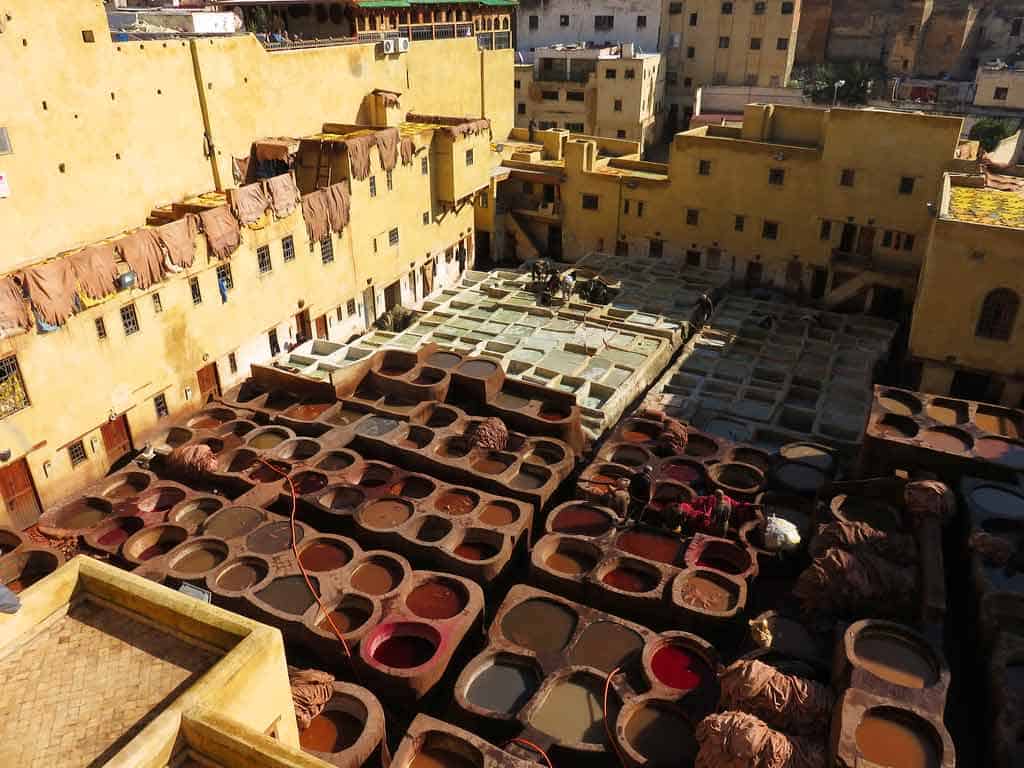
Leather Tanneries: Fes is famous for its centuries-old leather production. The tanneries provide a fascinating opportunity to observe traditional techniques that are still in use today, showcasing the city’s enduring craftsmanship.
Local Markets: The bustling markets of Fes are brimming with a diverse array of goods, including spices, ceramics, textiles, jewellery, and leather products, reflecting the richness of Moroccan culture.
Nejjarine Museum of Wooden Arts and Crafts: Set in a beautifully restored caravanserai, this museum celebrates the fine wooden arts and crafts that have been central to Fes for generations.
The day concludes with your guide accompanying you back to your riad.
7th day: Fes – Merzouga
After breakfast, the journey from Fes begins, passing through Ifrane, often referred to as the Switzerland of Morocco due to its distinctive sloping-roofed houses, designed to manage the seasonal snowfall. Near Azrou, in the cedar forests of the Middle Atlas, Barbary apes can often be spotted among the cedar and oak trees.
The journey then continues over the Middle Atlas Mountains, passing through Timahdite before arriving in Midelt, known as the “apple capital” of Morocco, nestled at the foot of Ayachi Mountain. Lunch is scheduled here. Afterwards, the route heads south over the Tizi-n-Talghemt pass, descending into the Ziz Valley, famous for its towering palm trees, expansive green oasis, and fortified kasbahs.
The itinerary reaches Errachidia, followed by Erfoud, a town well-known for its date festival and the fossils discovered in the area. There is an opportunity to visit fossil exhibits to learn how these ancient finds are transformed into decorative items and artefacts.
The adventure continues southwards through Rissani, culminating at the famous dunes of Erg Chebbi in Merzouga. From here, a camel ride lasting an hour to an hour and a half leads to a luxury desert camp, where tea and biscuits await. As the day draws to a close, the nearest high dunes offer an ideal vantage point to enjoy the uninterrupted view of the setting sun.
You have dinner and spend the night at a luxury desert camp in Merzouga with a private bathroom, king-sized beds, beautiful Moroccan furnishings, and lamps tastefully arranged to enhance your enjoyment of the silence and beauty of the dunes.
8th day: Merzouga
After breakfast, you take the camels out into the dunes together with a camel man. You’ll walk up to three hours in the morning, followed by about the same amount of time in the afternoon. Lunch will be with nomads at their camp in the desert and you will return to the bivouac for dinner and the night.
Alternatively, after breakfast, you will have the opportunity to explore the surrounding area more fully. Your first stop will be the village of Khamlia, home to the Gnawa people, who specialise in traditional Gnawa music brought to the region from sub-Saharan Africa during the slave trade. They will perform some of their music for you.
Next, you will visit the historic town of Rissani, the birthplace of the Alaouite dynasty, Morocco’s current ruling royal family. Rissani is surrounded by 360 ksars (fortified villages with many towers) and is known for its large souk, which takes place three times a week. Here, you can explore the market, where you’ll find a variety of goods, including spices, vegetables, household items, and handicrafts. Rissani is also built on the ancient site of Sijilmassa, once the meeting point for salt caravans travelling from Timbuktu in Mali.
In the afternoon, you will mount your camel and be guided by an experienced camel handler through the sand dunes of Erg Chebbi near Merzouga for about an hour to an hour and a half to enjoy the sunset. Dinner will be served at camp, followed by a night of drumming and music around the campfire.
Weather conditions and temperatures in South Morocco are rarely stable. Should it become too hot from May through to the end of September, we may have to advise you not to attempt trekking in the dunes but to take this alternative instead.
9th day: Merzouga – Dades Gorges
For early risers, there is the option to climb to the summit of the dunes to witness the sunrise, where the shifting colours of the sand and the play of shadows create a stunning spectacle. After breakfast back at the camp, the journey heads towards Tinghir and the Toudgha Gorges.
Along the way, a stop is made at the underground water channels (“khettarat”), which can be descended into to appreciate the remarkable architecture and ingenuity behind this irrigation system, designed to prevent evaporation in the intense summer heat. The channels gradually descend from a higher gradient until they emerge at ground level, feeding water into the fields.
In the Toudgha Gorges and Valley, there are opportunities to stroll along the riverbank, through lush gardens and fields, or venture beyond the gorge itself. A hike with a local guide around the gorge may also be of interest.
Later, the route continues towards the Dades Valley, where the fertile landscape can be explored before spending the night in a charming guest house at the valley’s edge.
10th day: Dades Gorges – Skoura Oasis
After breakfast, there is an opportunity to explore the Dades Valley and take a leisurely walk through its fertile landscape. Shortly afterwards, the journey continues to the Skoura Oasis, following the Boutartar piste off the beaten track to meet Berber nomads in their caves and share a cup of tea with them. This visit offers insight into nomadic life, highlighting the challenges of living in such a dry environment, where they strive to feed their goats and raise their children.
The route then passes through the Valley of the Roses, known for its annual Rose Festival in May, with a stop at local cosmetic co-operatives to learn about and sample the products made from the valley’s Damascene roses, if you so wish.
After lunch, the journey continues along the Road of a Thousand Kasbahs, arriving at Skoura Oasis. Here, Kasbah Amredhil, beautifully restored, provides a fascinating glimpse into traditional southern Moroccan housing.
The rest of the afternoon can be spent exploring the Skoura Oasis, with its countless palm trees and the daily rhythms of local life. Dinner and the night will be spent in an authentic guest house.
11th day: Skoura, Kasbah Aït ben Haddou, Ouarzazate – Zagora
After breakfast, the journey leads to Kasbah Aït ben Haddou, one of Morocco’s eight UNESCO World Heritage Sites and a favourite location for Hollywood films set in Morocco. A local guide will accompany the visit to the Kasbah, providing insight into the rich history of this iconic Moroccan site.
Continuing the journey, the route passes back through Ouarzazate and over the Tizi-n-Tinfifte Pass towards Agdez. As the descent begins, the landscape reveals an impressive number of palm trees, green oases, and ancient kasbahs—marking the entrance to the Dra’a Valley.
A visit to Kasbah Tamnougalte, the oldest kasbah in the Dra’a Valley, follows shortly afterwards. The journey then continues south along the ancient caravan route to Zagora, where the rest of the afternoon can be spent either exploring the town or relaxing in one of its many cafés.
The night will be spent in a comfortable riad.
12th day: Zagora – Erg Chegaga Dunes
After breakfast, the drive continues to Tamegroute, where there is an opportunity to visit the local green pottery co-operatives and the historic Quranic Library.
The journey then proceeds south, passing through several Berber villages en route to M’hamid, located at the end of the asphalted road and known as the gateway to the Sahara Desert. Lunch is planned here.
In the afternoon, the journey continues to the Erg Chegaga Dunes, involving approximately 60 kilometres of off-road driving. The route traverses various desert landscapes, including “erg” dunes, “hammada” stony plains, and oases. These wind-blown sand dunes, situated far from civilisation, offer a rare chance to experience a profound sense of tranquillity.
Upon arrival at the camp, a relaxing glass of tea is served before a camel ride to the summit of the Erg Chegaga dunes (300m), where the sunset provides a spectacular view. Back at the camp, dinner is served, followed by music and traditional nomads drumming around a campfire.
You will spend the night in a luxury camp with a private bathroom, king-sized beds, beautiful Moroccan furnishings, and lamps tastefully arranged to enhance your enjoyment of the silence and beauty of the dunes.
13th day: Erg Chegaga: free day or trekking
After breakfast, the day is dedicated to trekking in the vast expanse of the Sahara Desert. Camels are taken along for the journey, either to be ridden or simply to walk beside, as they carry everything required for preparing lunch, which will be cooked in the dunes by the camel guide.
Walking time is approximately five hours, with two and a half hours in the morning and the same in the afternoon, though riding the camels is an option. In the afternoon, the return is made to the desert camp.
Alternatively, the day can be spent relaxing at the desert camp.
Should the weather between May and the end of September not be conducive to a whole day in the Chegaga dunes, we can discuss an alternative stay elsewhere.
14th day: Erg Chegaga Dunes – Taroudant
In the morning, the journey continues for another 90 kilometres across the magnificent Sahara Desert, travelling over flat, stony terrain. A stop is made at the salt flats and the dried-up Iriqui Lake, where fossils can be found, some lying loosely on the surface, while others remain embedded in the rocks.
From the edge of the desert at Foum Zguid, the drive heads north towards Taznakht, a town renowned for its Berber gelims and traditional carpet weaving. Lunch is planned here, providing a chance to explore the local craftsmanship.
The journey then continues, crossing the Tizi-n-Ikhsane and Tizi-n-Tighatine passes before arriving at Taliouine, the heart of Morocco’s saffron-growing region. After lunch, there is a scheduled visit to a local government-run museum dedicated to saffron agriculture. Upon entering, the delightful aroma of saffron is immediately noticeable.
The day concludes with a journey to Taroudant, where accommodation is arranged in a riad for the night.
15th day: Taroudant – Essaouira
The day begins with a visit to a town often referred to as the “little Marrakech,” renowned for its imposing ramparts and historic charm. From there, the journey continues through the scenic Souss River Valley, where the landscape is characterised by argan trees and vast banana and orange plantations, extending all the way to Agadir.
The route then heads north along the coastline, passing through Taghazout, a vibrant surfing hub celebrated for its relaxed atmosphere and stunning ocean views. As the journey progresses alongside the Anti-Atlas Mountains, a dramatic backdrop of rugged peaks and the Atlantic Ocean unfolds.
Upon arrival in Essaouira, a coastal town known for its artistic heritage and fortified medina, accommodation is arranged at a riad, providing an opportunity to unwind and settle in. The evening offers the option of relaxing in one of the charming cafés in the town centre, enjoying the local atmosphere and coastal breeze.
16th day: Essaouira Sightseeing
Essaouira, known as Mogador during its Portuguese past, has long been a favourite among visitors. This charming seaside town offers a picturesque corniche for leisurely walks and a wide, sandy beach that stretches along the Atlantic coast.
After breakfast, the day is dedicated to exploring this captivating town. The visit with a stroll through the medina’s bustling markets reveals narrow, winding streets lined with shops offering a wide array of handcrafted goods.
At the seafront, freshly caught fish can be chosen and prepared on the spot, providing a unique and local dining experience. The rest of the afternoon is free to explore more of the medina, enjoy a peaceful walk along the beach, or simply relax in one of the many cafés overlooking the ocean. With excellent surfing conditions and a laid-back atmosphere, Essaouira is a haven for beach lovers and the perfect place to unwind.
The night is spent in a comfortable riad within the town, rounding off a relaxing day by the coast.
17th day: Essaouira – Agafay Desert
After breakfast, you continue your holiday in Morocco driving to Marrakech. Along the way, we pass many Berber villages, stopping perhaps at a co-operative of argan oil offering higher quality than that outside of Morocco where you can purchase argan oil products if desired! Argan nuts are traditionally processed by hand into one of the world’s most versatile oils, valued both for its culinary uses and nourishing properties for the skin.
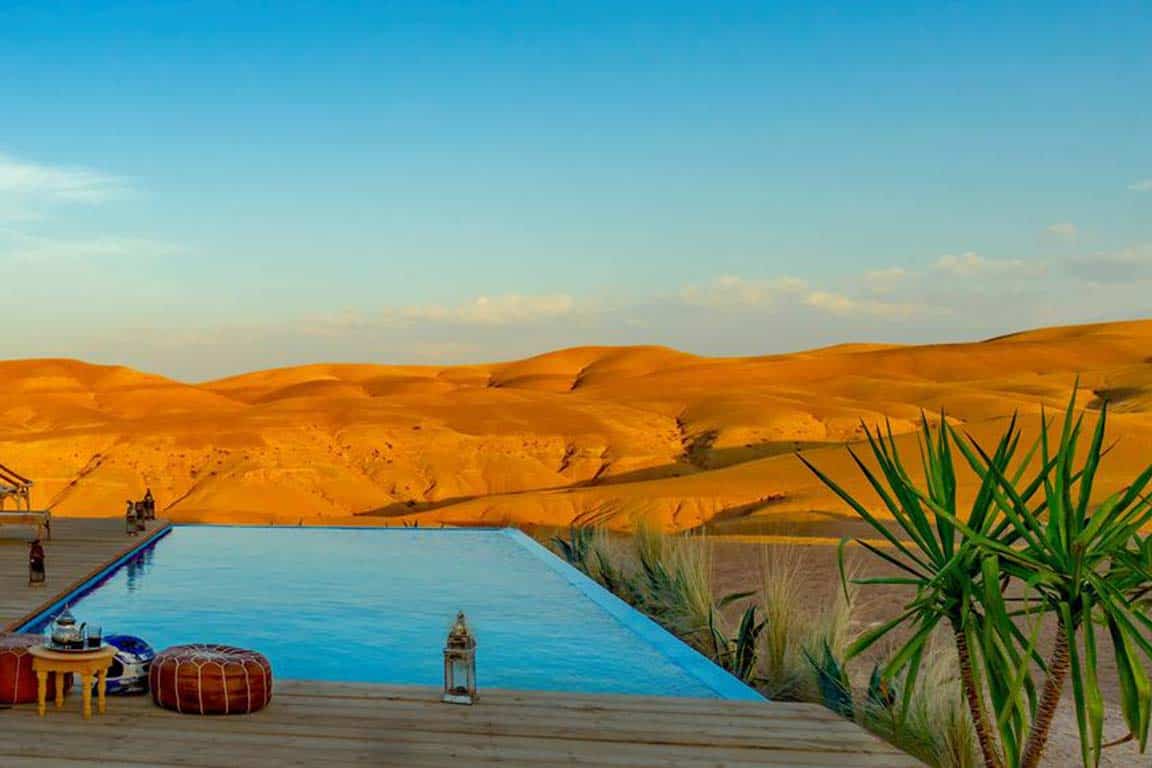
Agafay Desert, outside Marrakech, is a rocky, dry, moon-like desert offering unexpected and splendid views of the high Atlas Mountains, snow-capped in winter. In the middle of the desert lies an unexpected oasis, a place of tranquillity and pure peacefulness, disturbed only by the occasional flock of sheep passing by in their search for grass and herbs.
On arrival in Agafay, you will be welcomed with traditional mint tea and Moroccan biscuits. Shortly after, enjoy a one to one hour and a half camel ride and take photos of yourselves wearing blue turbans with the sunset and the snow-capped Atlas Mountains in the background.
At night, taste one of the most delicious dishes in Moroccan cuisine under a starlit sky in a magical setting and spend the night in a luxury tent.
18th day: Agafay Desert, Atlas Mountains, Ourika, Anima Garden and the saffron farm, Marrakech
After breakfast, the journey begins towards the majestic Atlas Mountains. The first stop is at the Berber village of Tahanout, where you may share a glass of tea with a local Berber family, who will introduce traditional elements such as a hammam and bread ovens. Shortly afterwards, Toubkal National Park is reached, followed by Asni, a small Berber village known for its local souks.
The route then continues east through the Ourika Valley, which is lined with gardens, fruit trees, small villages, summer houses, as well as cafés and restaurants.
This part of the High Atlas is perfect for hiking, which can be arranged with a local Berber guide. Such a hike provides a deeper experience of the stunning countryside, offering insight into the mountain vegetation and local Berber life. It is a valuable opportunity to discover a different side of Moroccan life, leaving lasting impressions.
On the return to Marrakech, you may visit the Saffron Garden, the Paradis du Safran. Alongside saffron cultivation, the site features a large orchard of olive trees, lemons, oranges, kumquats, pomegranates, and a variety of aromatic and medicinal herbs. November is the ideal time to visit, coinciding with the saffron harvest. The entrance fee is 100 dirhams and includes a tour, saffron tea, mineral water, and a barefoot Kneipp walk.
Soon after, the Anima Garden, designed and created by André Heller over a period of ten years, is visited. This unique garden has been described as one of the most beautiful and imaginative in the world.
Arrival back in Marrakech is expected by late afternoon, with an overnight stay in the city.
19th day: Marrakech Sightseeing Guided Tour
Marrakech is renowned for its lively Djemaa El Fna, a bustling square where visitors will find juice stalls, vendors offering dried fruits and nuts, henna artists, snake charmers, storytellers, and a variety of food stalls that truly come to life in the evening.
Depending on individual schedules and preferences, the following attractions could be explored:
The Majorelle Gardens: Designed by French artist Jacques Majorelle and later owned by Yves Saint Laurent, these tranquil gardens feature serene fish ponds, exotic plants, and the signature “Majorelle blue” pots. The site also includes a small Berber museum, a café, and a restaurant serving Moroccan-inspired cuisine.
Le Jardin Secret: A restored Islamic Paradise Garden, divided into four sections by narrow water channels. Its lush greenery and fountains offer a peaceful retreat, with informative displays about the garden’s reconstruction.
The Koutoubia Mosque: As the largest mosque in Marrakech, the Koutoubia is an iconic landmark. Its name, “al-Koutoubiyyin,” reflects its historical connection to booksellers. Built in the Almohad style, the mosque’s 69-metre minaret is crowned with four distinctive copper globes.
El Bahia Palace: Constructed between 1894 and 1900 for the Grand Vizier Ahmed Ibn Moussa, this opulent palace boasts 160 rooms arranged around elegant courtyards. Visitors will find intricate stucco panels, zellij tilework, tiled floors, carved cedar ceilings, and marble finishes, all set within an expansive eight-hectare garden.
Ben Youssef Medersa: Once home to 800 students, this Quranic school was originally founded in 1331 by Sultan Abou el Hassan and later rebuilt by the Saadians in the 1560s. Its striking architecture features detailed zellij tiling, stucco plasterwork, and intricately carved cedar wood.
The Saadian Tombs: Dating back to the reign of Sultan Ahmad al-Mansur (1578–1603) and rediscovered in 1917, these tombs serve as the final resting place for around sixty members of the Saadi Dynasty, making them an important historical site.
The Jewish Mellah: Like many Moroccan cities, Marrakech has a historic Jewish quarter known as the Mellah. Although few synagogues remain in use today, many still stand as a testament to the city’s diverse heritage.
The Souks: Marrakech’s vibrant souks form the heart of the city, offering a wide range of goods from handicrafts, spices, and traditional medicines to Moroccan slippers (babouches), leather goods, textiles, pottery, and silver jewellery. These bustling markets provide endless opportunities to negotiate prices and discover unique treasures.
With its rich history, vibrant culture, and stunning architecture, Marrakech evokes the magic of A Thousand and One Nights.
FYI: You can buy entry tickets at each monument, but Majorelle Garden tickets must be booked online in advance.
Note: For those interested, there is the option to arrange a traditional Moroccan cooking class instead of a city tour, which is available at an additional cost.
20th day: Marrakech – Airport transfer in Marrakech or Casablanca
After breakfast in your riad, and depending on the time of your flight, you will be transferred by your driver to the airport to catch your flight on time.
Map of the Itinerary:
