 Top-Rated On Tripadvisor
 Trips for All Budgets
 Experience the real Morocco with expert guides


 Top-Rated On Tripadvisor Trips for All Budgets Experience the real Morocco with expert guides
Morocco’s Jewish heritage stands as an extraordinary testament to centuries of rich cultural exchange. With grand synagogues, bustling Jewish quarters, and sacred cemeteries, this journey provides insight into the enduring presence and contributions of the Jewish community in Morocco. Casablanca is home to historic synagogues and the unique Museum of Moroccan Judaism, the only one of its kind in the Arab world.
Meknes’ thriving Mellah still hosts several active synagogues, while Fes reflects the deep mediaeval roots of Jewish life in the region. In Sefrou, the Mellah holds an important place in the town’s history, and Marrakech’s Jewish district features the historic Lazama Synagogue, among other cultural highlights.
Essaouira marks the conclusion of this exploration, once home to a vibrant Jewish community. Restored synagogues and cemeteries here stand as enduring symbols of intercultural harmony, encapsulating the richness of Morocco’s Jewish heritage.
| No Days | Meals |
|---|---|
| All-inclusive | |
| Total price | |
| 2 Persons |
|---|
| 1815 € * |
| 3630 € * |
| 3 Persons |
|---|
| 1755 € * |
| 5265 € * |
| 4 Persons |
|---|
| 1695 € * |
| 6780 € * |
| 5 Persons |
|---|
| 1625 € * |
| 8125 € * |
| 6 Persons |
|---|
| 1625 € * |
| 9750 € * |
Our driver will meet you at Casablanca airport and transfer you through the stunning Moroccan countryside to the city in a comfortable, air-conditioned vehicle. Welcome to Morocco!
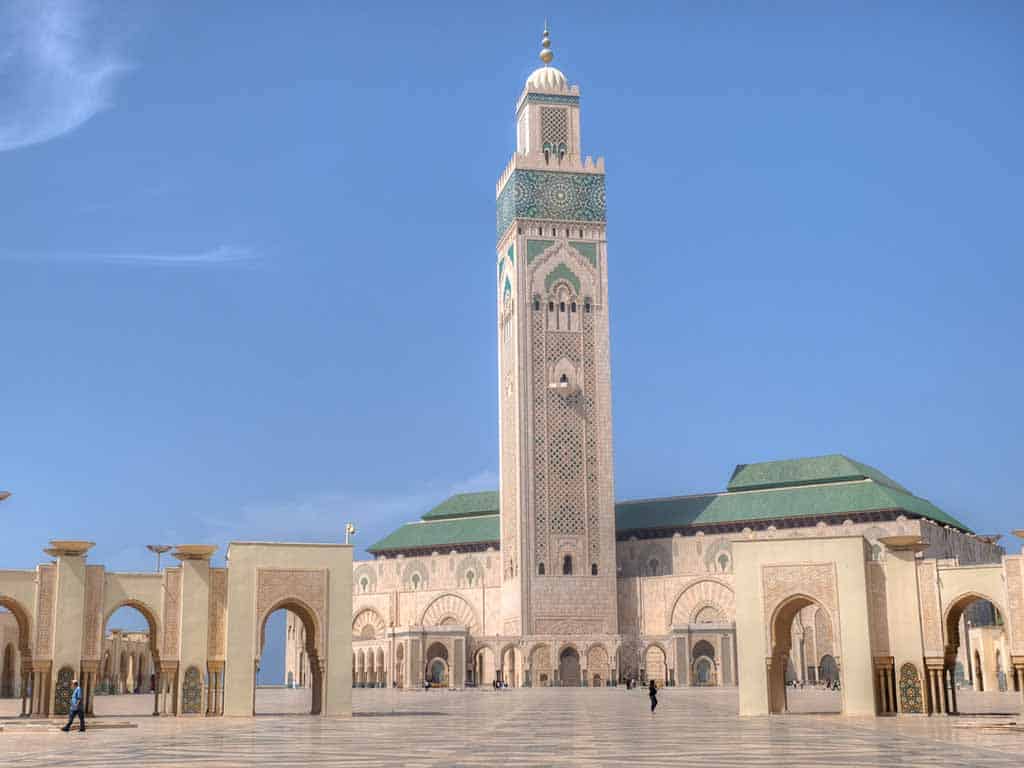
Once you have checked in and settled at your riad, you may decide to visit the Hassan II Mosque, inaugurated in 1993. Built in celebration of Hassan II’s 60th birthday, it is the second-largest religious building in Africa and features the world’s second-highest minaret. On Fridays and religious holidays, visits are limited to specific times, and due to high visitor numbers, there may be waiting times at the ticket office. The tour of this impressive landmark lasts about an hour, with tickets priced at approximately 120 dirhams at the time of writing.
In the evening, you can enjoy dinner at one of Casablanca’s few kosher restaurants.
You will spend the night in a hotel in the centre of the city.
FYI: Guided tours of the Hassan II mosque are limited on Fridays or religious holidays. Please check the schedule here: Hassan II Mosque Tours and Tickets
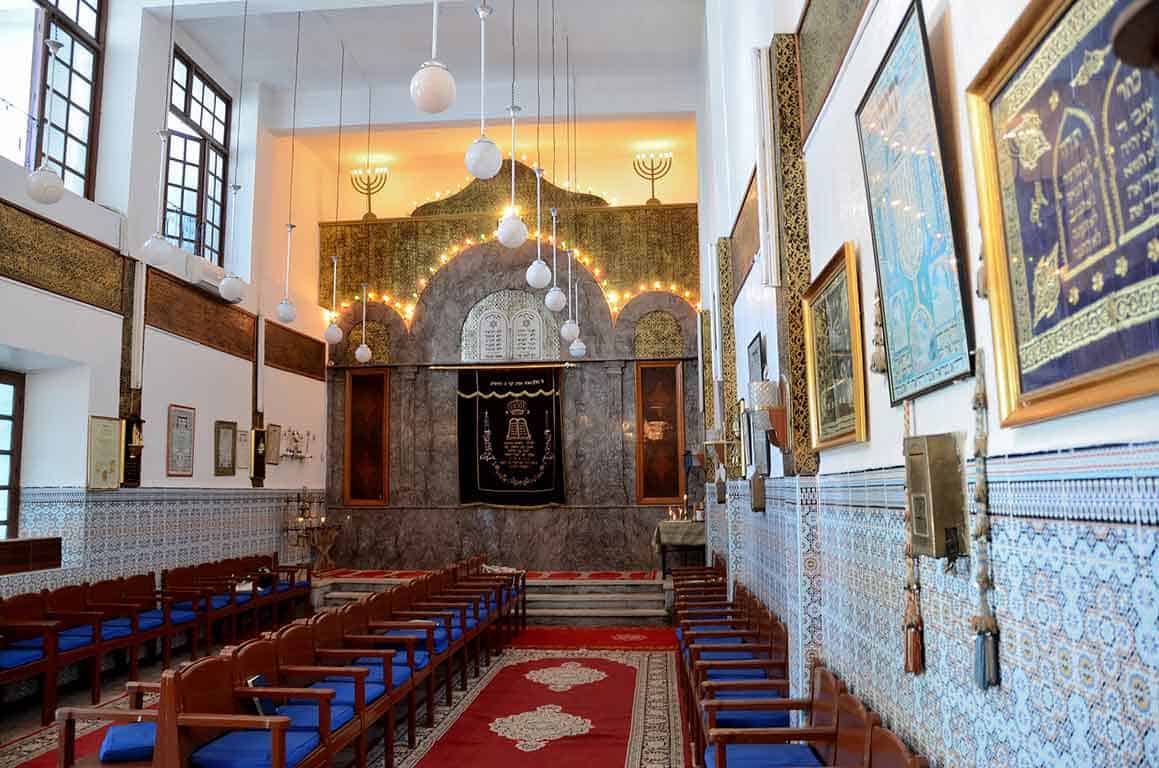
Casablanca is home to over 20 synagogues and vibrant Jewish neighbourhoods. This Jewish heritage tour of Casablanca includes visits to the city’s most historic synagogues: Temple Beth-El, Temple Em Habanim, and Temple Neve Shalom. The itinerary also includes the Museum of Moroccan Judaism (the only Jewish museum in the Arab world), as well as Casablanca’s Jewish Mellah and cemetery.
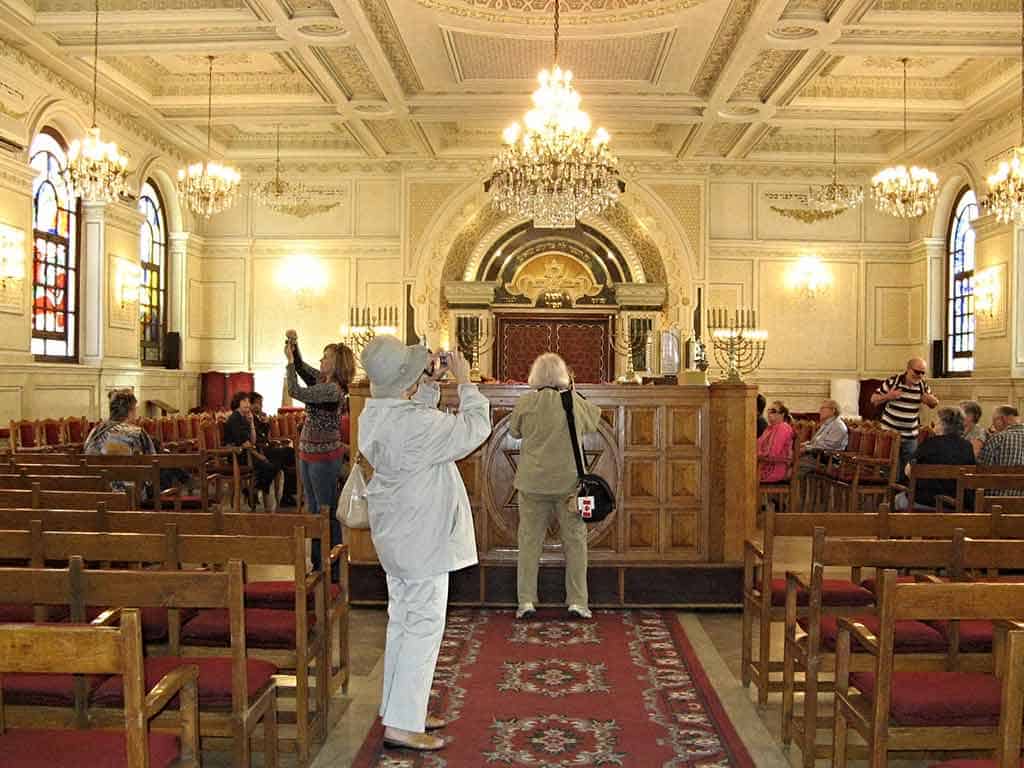
Temple Beth-El, Casablanca’s most renowned synagogue, features impressive walls adorned with stained glass windows and gilded biblical quotes, with massive crystal chandeliers hanging from the ceiling. The ark houses Hebrew scrolls draped in intricately embroidered velvet mantles. Temple Beth-El is a masterpiece of Jewish architecture and serves as the main gathering place for Casablanca’s Jewish community. Today, over 5,000 Jews live in the city’s modern quarters, worshipping in more than 20 synagogues and dining in kosher restaurants.
The Mellah, Casablanca’s Jewish quarter, established less than a century ago, is also part of the visit. While no Jews currently reside there, kosher butchers still operate along its narrow streets. The Jewish cemetery within the Mellah, with well-maintained white stone markers inscribed in Hebrew, French, and Spanish, is particularly noteworthy. Each year, the Jewish community celebrates a hiloula at the tomb of the saint, Eliahou. Historic synagogues such as Temple Em Habanim and the beautifully restored Temple Neve Shalom are also included.
After lunch, the tour continues to the Museum of Moroccan Judaism in the Oasis district. Founded in 1997, this museum is the first and only one dedicated to Judaism in the Arab world. Originally built in 1948 as a Jewish orphanage housing up to 160 children, the museum was renovated in 2013 and is a significant site for Jewish visitors to Morocco.
Later in the day, a one-hour drive along the motorway reaches Rabat, where overnight accommodation is arranged in a beautiful riad.
After breakfast at your riad, the day begins with a visit to the Hassan Tower, perched on a hill overlooking the Bouregreg River. This unfinished mosque tower stands as an iconic symbol of Rabat and is one of the capital’s main attractions. Nearby, the exquisite Mausoleum of Mohammed V, adorned with beautiful stained glass windows, variegated marble, and a metal-gated stairway leading to the tombs of Mohammed V and his son, Hassan II, awaits exploration.
In Rabat, a walk through the Jewish Mellah offers a glimpse into its narrow alleyways, historically home to many Jewish families, a few of whom still reside there today. Following this, the Chellah Necropolis provides an opportunity to discover ancient ruins and gardens, with views over Salé, the birthplace of the 18th-century scholar and Kabbalist, Rabbi Hayyim ben Moses Attar, renowned for his Torah commentary known as the Or HaHayyim.
After lunch, you’ll travel on to Meknes for a half-day Jewish Heritage tour of this imperial city. The walled medina, with its imposing ramparts and gates, offers excellent photographic opportunities. The old Jewish quarter, with its narrow streets and vibrant courtyards, is home to the tomb of Rabbi David Benmidan, a revered figure in the city. Meknes’ Jewish history is also reflected in the Hebraic inscriptions found at the Meknes Zaouia, while the new Mellah contains up to eleven synagogues, eight of which remain in use today.
Outside the city, the Roman ruins of Volubilis provide further insight into Morocco’s ancient history. Arrival in Fes is expected by late afternoon, with an overnight stay arranged in a charming riad.
Fes, one of Morocco’s Imperial Cities, is rich in mediaeval Jewish history and was once home to Rabbi Isaac Alfasi, a notable Talmudic scholar. Jewish travellers can explore its unique heritage through visits to synagogues, mediaeval universities, cemeteries, the Mellah (Jewish quarter), and historic gardens and palaces, all reflecting Fes’s enduring cultural significance.
You can visit the following monuments and sites of interest, according to your preference:
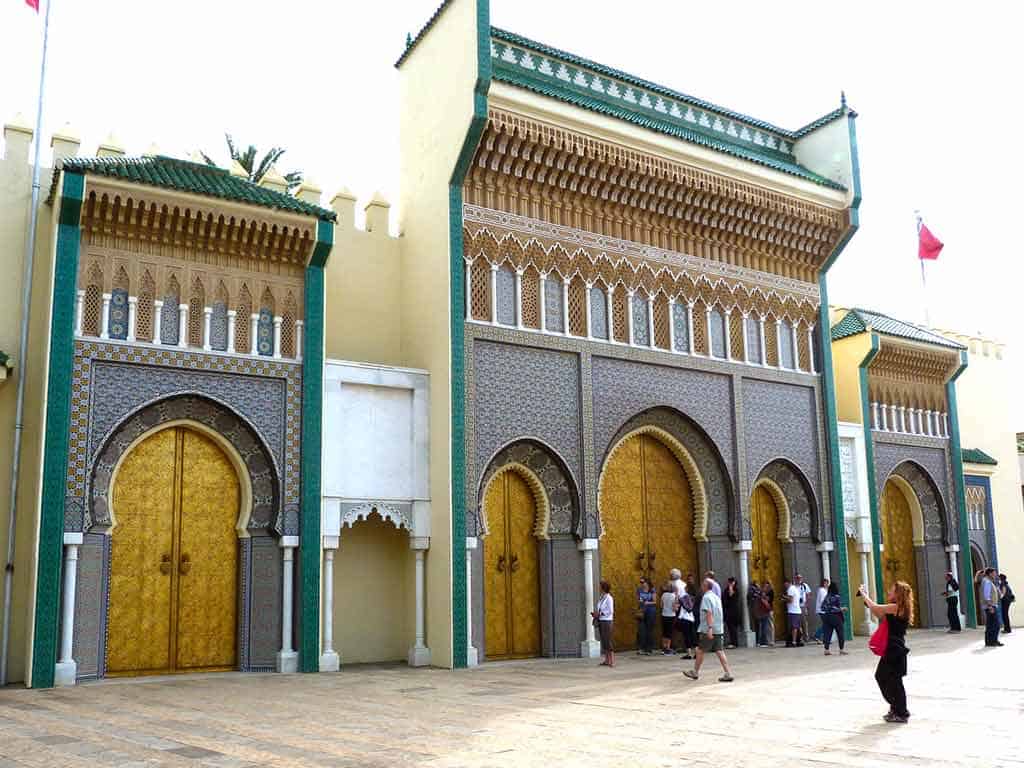
Mellah Quarter: This Jewish quarter, over 650 years old, stands as a testament to the city’s rich Jewish history. Once home to over 40 synagogues, the Mellah, located next to the Royal Palace, reflects the deep connections between Jewish life and Moroccan history.
Ibn Danan Synagogue: One of Morocco’s oldest and best-preserved synagogues, Ibn Danan offers a rare insight into the Jewish community that once flourished within the city walls of Fes. Its architecture tells the story of a vibrant religious heritage.
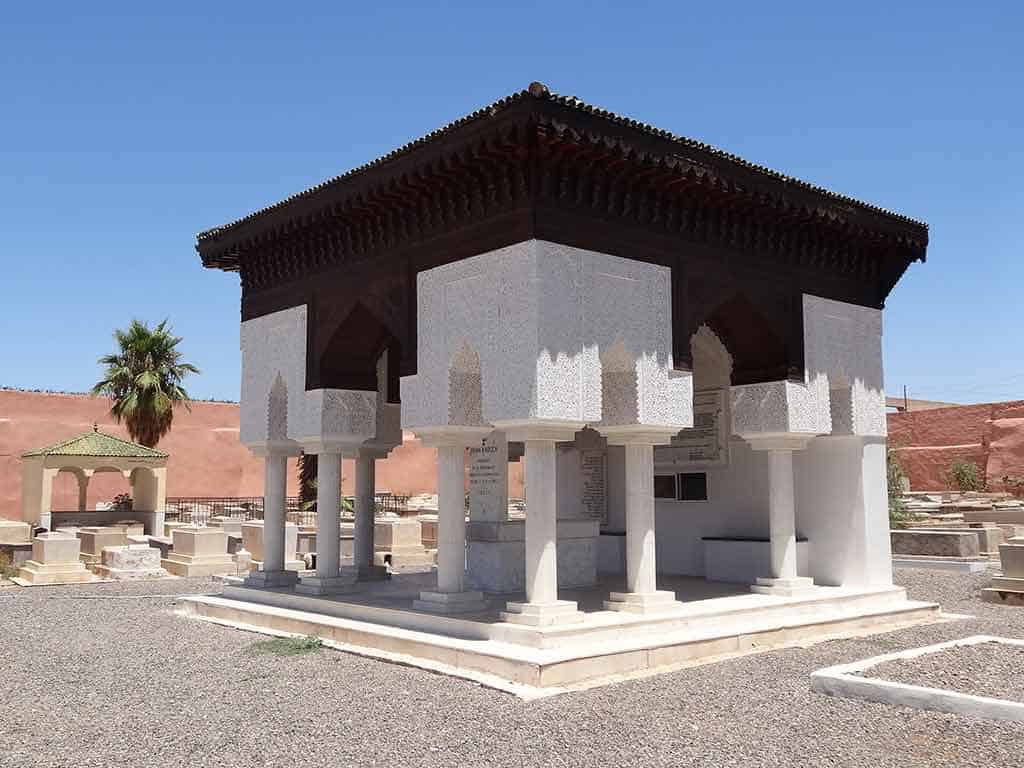
Jewish Cemetery: Located near the Mellah, this cemetery contains the tombs of many Jewish saints, including the revered Saint Solica. It serves as a deeply significant site for visitors, honouring centuries of Jewish tradition and presence.
Fes Medina: The UNESCO-listed Medina is a maze of mediaeval streets, bustling souks, and historical landmarks. Its ancient mosques and vibrant markets give insight into the city’s rich past and its role as a cultural crossroads.
Leather Tanneries: Famous for its centuries-old leather production, Fes offers the chance to witness traditional techniques still in use today, showcasing the city’s enduring craftsmanship.
Local Markets: Fes’s markets are brimming with goods, including spices, ceramics, textiles, jewellery, and leather products, reflecting the diversity of Moroccan culture.
Nejjarine Museum of Wooden Arts and Crafts: Set in a restored caravanserai, this museum celebrates the fine wooden craftsmanship that has been central to Fes for generations.
The day concludes with your guide accompanying you back to your riad.
After breakfast in your riad, the Jewish Heritage tour in Morocco continues with a drive to Marrakech via Jewish Seffrou. The journey passes through Ifrane, nicknamed “the Switzerland of Morocco” due to its distinctive architecture, cedar forests, and winter ski resorts. The synagogues and cemeteries of this area have served as a centre for Jewish pilgrimages for centuries.
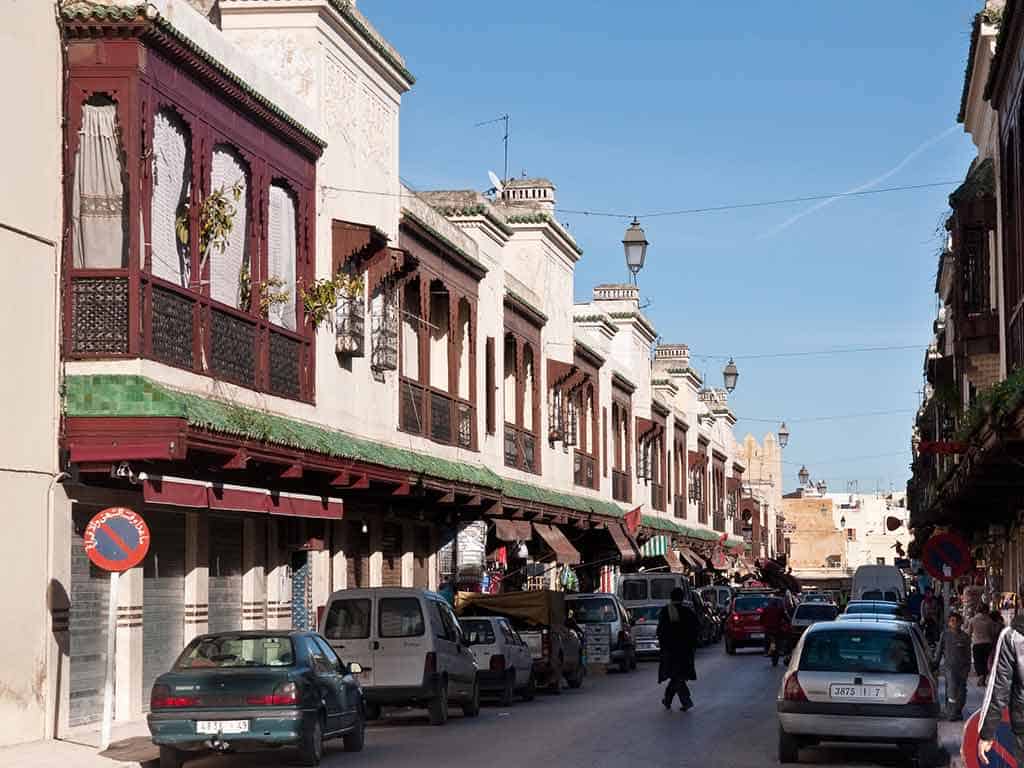
Along the road to Seffrou, there is an opportunity to visit Bhalil cemetery. At one time, Morocco’s Jewish community made up a significant portion of Seffrou’s population, and half the town’s buildings form the Mellah, where a wander through reveals its unique character. The white-walled medina of Seffrou still retains Jewish housing, distinguishable by wooden balconies.
In Seffrou, Muslims and Jews lived harmoniously as neighbours, practising their religious rituals side by side—an enduring example of interfaith dialogue in Morocco.
The journey then continues to Beni Mellal, with a short stop to explore Zaouia Cheikh. After lunch, Kasbah Ras el-Ain awaits, a vast structure built from natural stones. Located at a panoramic viewpoint, it offers splendid views over orange and olive groves, the fertile valley, and Beni Mellal below.
Arrival in Marrakech is expected by late afternoon, with an overnight stay arranged in a beautiful riad.
Marrakech, one of Morocco’s four Imperial Cities, is also one of the world’s most renowned and popular travel destinations. On this Jewish Heritage tour of Marrakech, you will explore the Jewish Mellah, visit the Lazama Synagogue, and discover some of the city’s most fascinating sights.
Depending on your time and preferences, the following attractions can be included:
Jewish Mellah: Begin your tour in the Jewish Mellah, founded in 1558. Although the Jewish community once enjoyed autonomy, they were restricted from owning property outside the Mellah. Today, only around 250 Jews remain in Marrakech. The recently restored Mellah is well worth exploring, with its bustling souks and historic streets. You may also visit Bet-El Synagogue, one of the key gathering places for Marrakech’s Jewish community.
El Bahia Palace: Built between 1894 and 1900 for Grand Vizier Ahmed Ibn Moussa, this grand palace features 160 rooms arranged around beautifully designed courtyards. Marvel at the intricate stucco panels, zellij tilework, marble floors, carved cedar ceilings, and elegant finishes, all set within lush gardens covering eight hectares.
Ben Youssef Mederssa: Originally founded in 1331 and later rebuilt by the Saadians in the 1560s, this former Quranic school once housed 800 students. Its stunning architecture showcases detailed zellij tiling, intricate stucco plasterwork, and elaborately carved cedar wood.
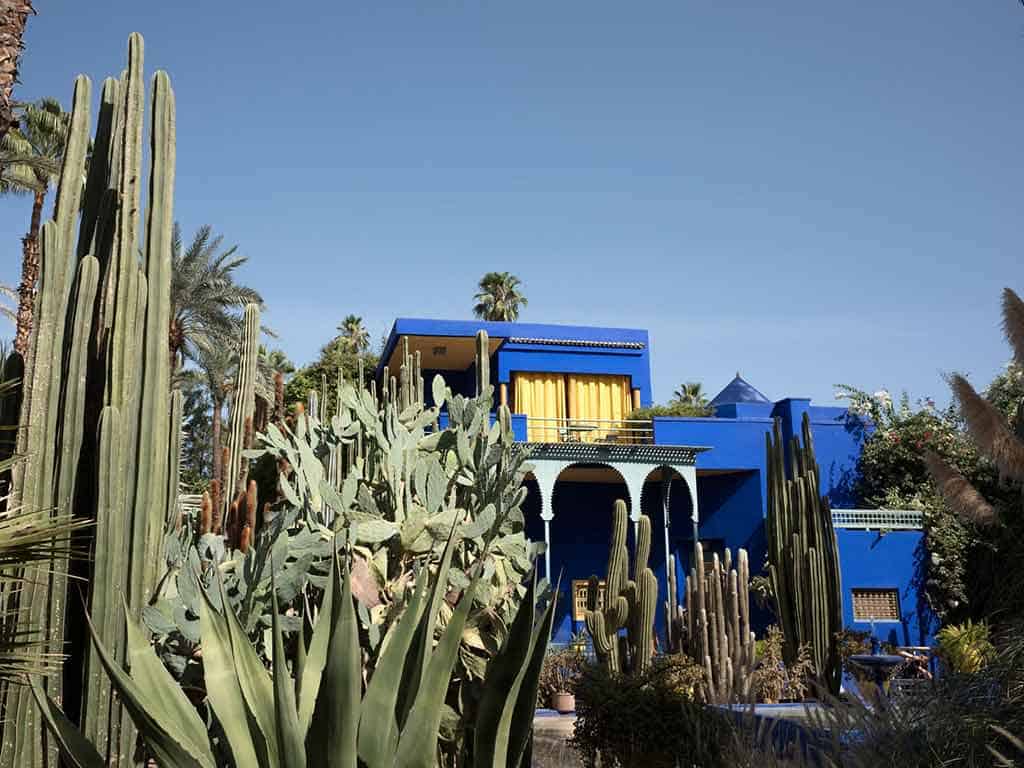
The Majorelle Gardens: Designed by French artist Jacques Majorelle and later restored by Yves Saint Laurent, these peaceful gardens feature exotic plants, serene ponds, and the famous “Majorelle blue” decor. The gardens also host a small Berber museum, a café, and a restaurant offering Moroccan-inspired cuisine.
Le Jardin Secret: A recently restored Islamic Paradise Garden, divided by narrow water channels. This tranquil space, filled with fountains and greenery, offers a peaceful retreat from the bustling city. Informative displays reveal the garden’s reconstruction history.
The Souks: Marrakech’s vibrant souks are the beating heart of the city, offering everything from spices, textiles, leather goods, and pottery to traditional Moroccan slippers (babouches) and silver jewellery. These lively markets provide an endless array of unique items and a chance to hone your bargaining skills.
Spend the night in your beautiful riad.
FYI: You can buy entry tickets at each monument, but Majorelle Garden tickets must be booked online in advance.
After breakfast, the journey continues to Essaouira, a picturesque coastal town renowned for its Portuguese and Jewish history, iconic blue boats, whitewashed houses, fresh seafood, and the annual Gnawa music festival.
Along the way, there is a stop to witness the unusual sight of goats climbing argan trees, feasting on the leaves and nuts. A visit to a women’s argan oil cooperative offers insight into the traditional process of extracting argan oil and its transformation into a variety of products.
Upon arrival in Essaouira, the vibrant seaport presents an opportunity to photograph the famous blue boats and select freshly caught fish to be prepared for lunch on the spot.
In the afternoon, a guided Jewish heritage tour of Essaouira provides an exploration of the Jewish quarter, established in the 18th century when Jews made up 40% of the town’s population. At its peak, Essaouira boasted over 25 synagogues, though only a few remain today. The recently reopened Bet Ha-Knesset Simon Attias Synagogue now houses a Jewish museum and a future cultural centre named after historian Haim Zafrani, dedicated to preserving Morocco’s Jewish heritage and strengthening Essaouira’s cultural identity.
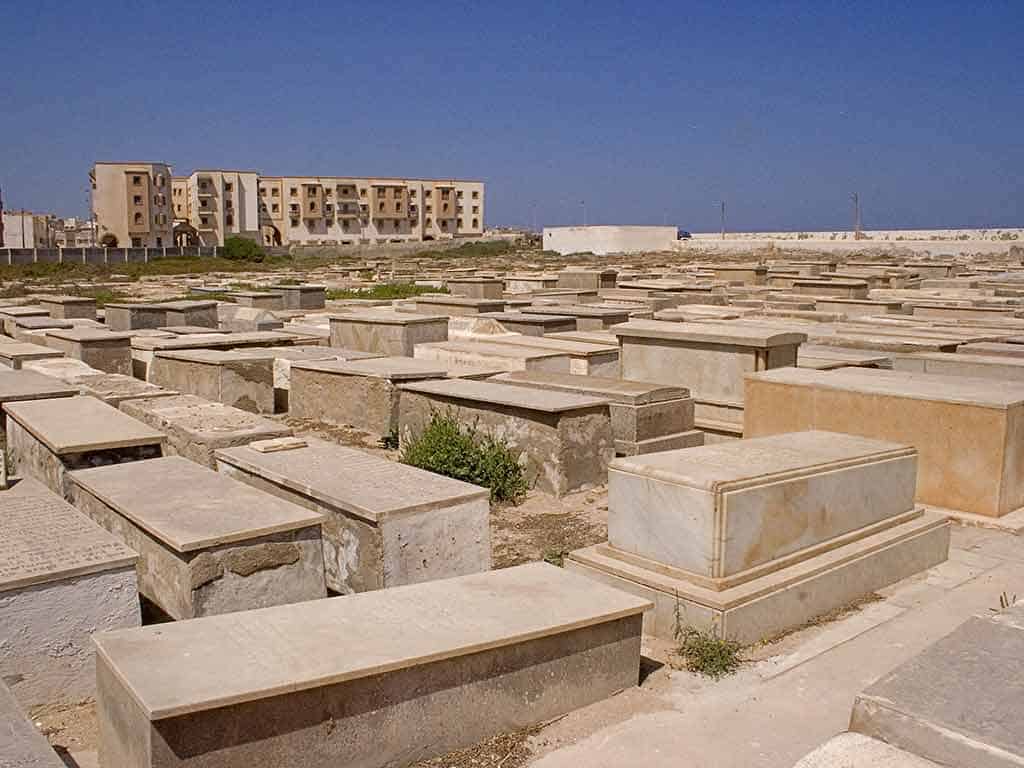
The visit continues with Essaouira’s Jewish cemeteries. The older cemetery is home to the mausoleum of Rabbi Haim Pinto, the focal point of an annual pilgrimage in autumn. The newer cemetery, established in the 18th century to accommodate the growing Jewish population, serves as the final resting place for numerous rabbis, intellectuals, musicians, and other notable Jewish residents of Essaouira.
The day concludes with an overnight stay in a charming riad located in the heart of Essaouira.
After breakfast at your riad, the exploration of the seaport town of Essaouira continues. The day begins with a tour of the walled medina, a UNESCO World Heritage Site, with opportunities to capture photos of its impressive fortifications and whitewashed houses. The medina has served as a backdrop for numerous films and series, including Game of Thrones.
While wandering through its breezy alleyways, the bustling souks reveal a range of artisans and colourful shops offering thuja wood handicrafts, metal souvenirs, and other local treasures.
After lunch, departure to Marrakech or Casablanca follows. The driver ensures arrival at the airport in time for the flight, marking the conclusion of the Jewish Heritage Tour in Morocco. Please note that the day’s schedule may vary depending on flight time.