


 Top-Rated On Tripadvisor
 Trips for All Budgets
 Experience the real Morocco with expert guides
Imperial Cities and Morocco Desert tour from Casablanca – overview:
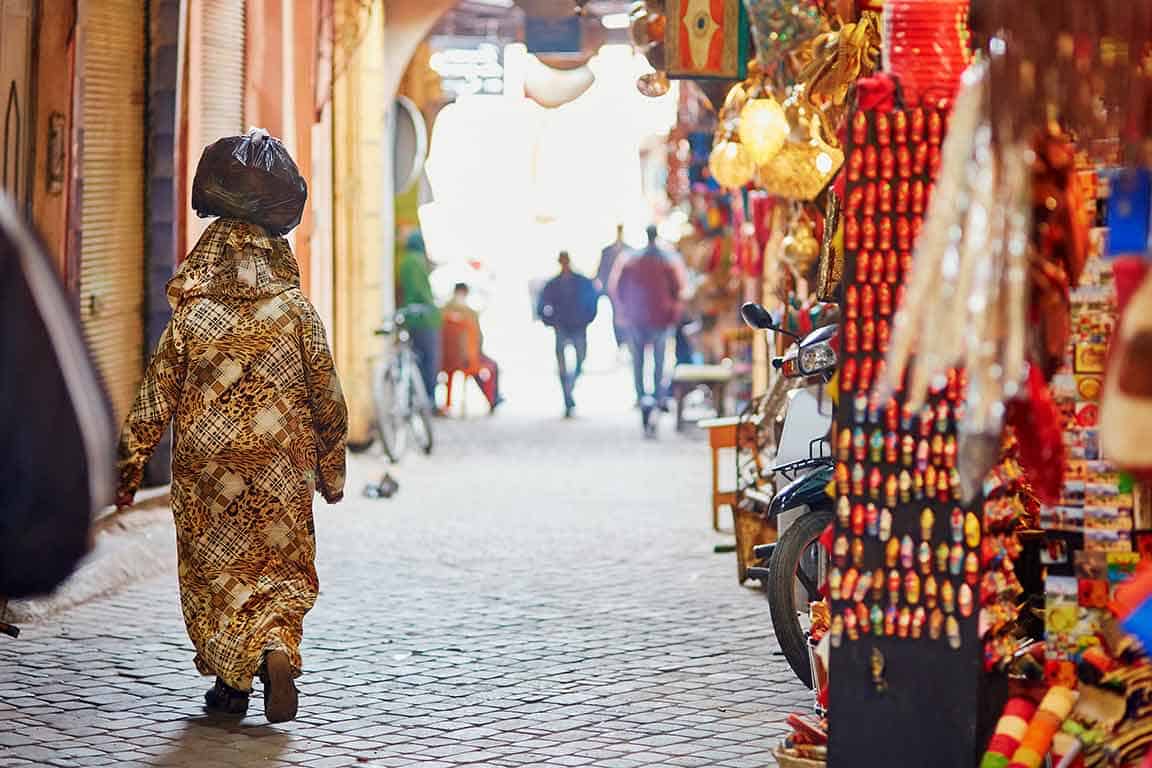
This 10-day journey offers a true taste of Moroccan adventure, combining the timeless allure of the Imperial Cities with the wild beauty of the Sahara Desert and the enchanting landscapes of the Great South. The bustling medinas of Morocco’s iconic Imperial Cities are filled with royal palaces and grand mosques that stand as silent witnesses to centuries of history. In Marrakech and Fes, vibrant souks display the exquisite work of artisans crafting damascene metalwork, leather goods, hand-painted ceramics, and colourful spices.
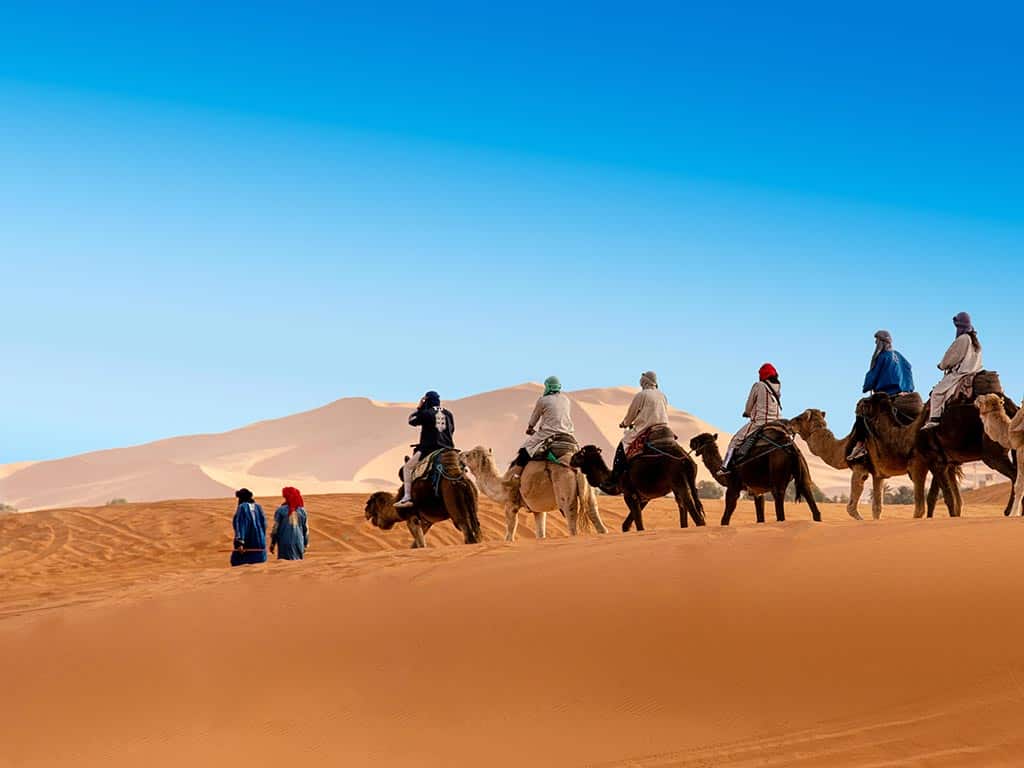
The adventure continues with a camel trek across the rolling Erg Chebbi dunes, where the vast desert offers a sense of serenity. Evenings spent dining under a canopy of stars, accompanied by local Saharan nomads, bring the experience to life with Berber music and drumming around a campfire.
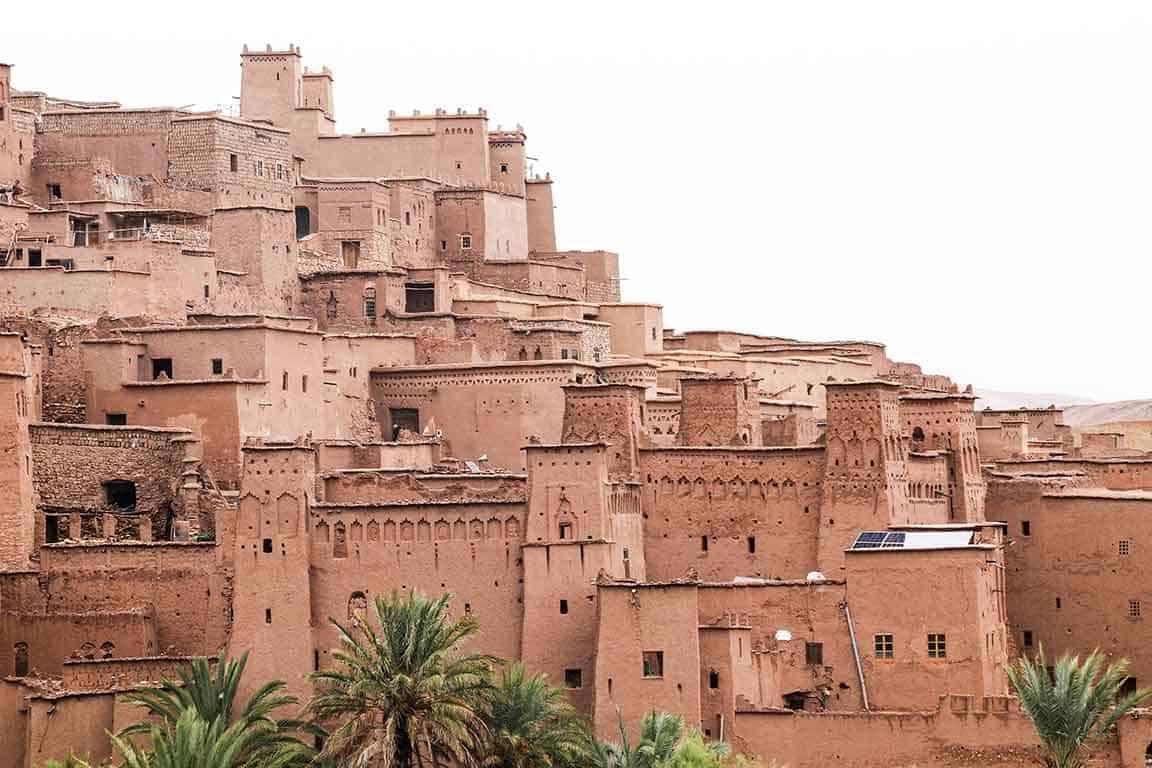
In the Dades Valley, scenic trails wind through rugged landscapes, revealing awe-inspiring vistas. Along the way, the rich heritage of the Berber people is evident, as are Morocco’s iconic Kasbahs, including the UNESCO World Heritage Site of Ksar Aït ben Haddou, the ancient stronghold of Telouet, and the picturesque Kasbah Amredhil.
Morocco desert tour from Casablanca 10 days – highlights:
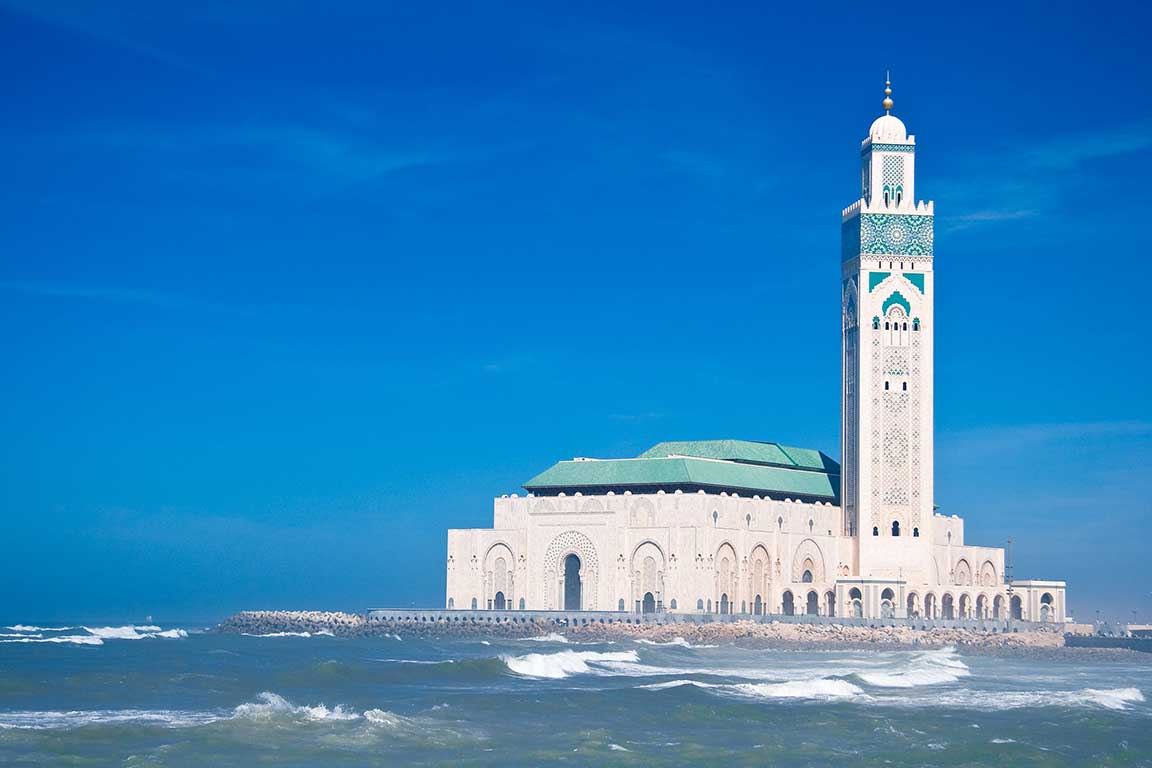
- Visiting the Hassan II Mosque in Casablanca and photographing its architectural splendour
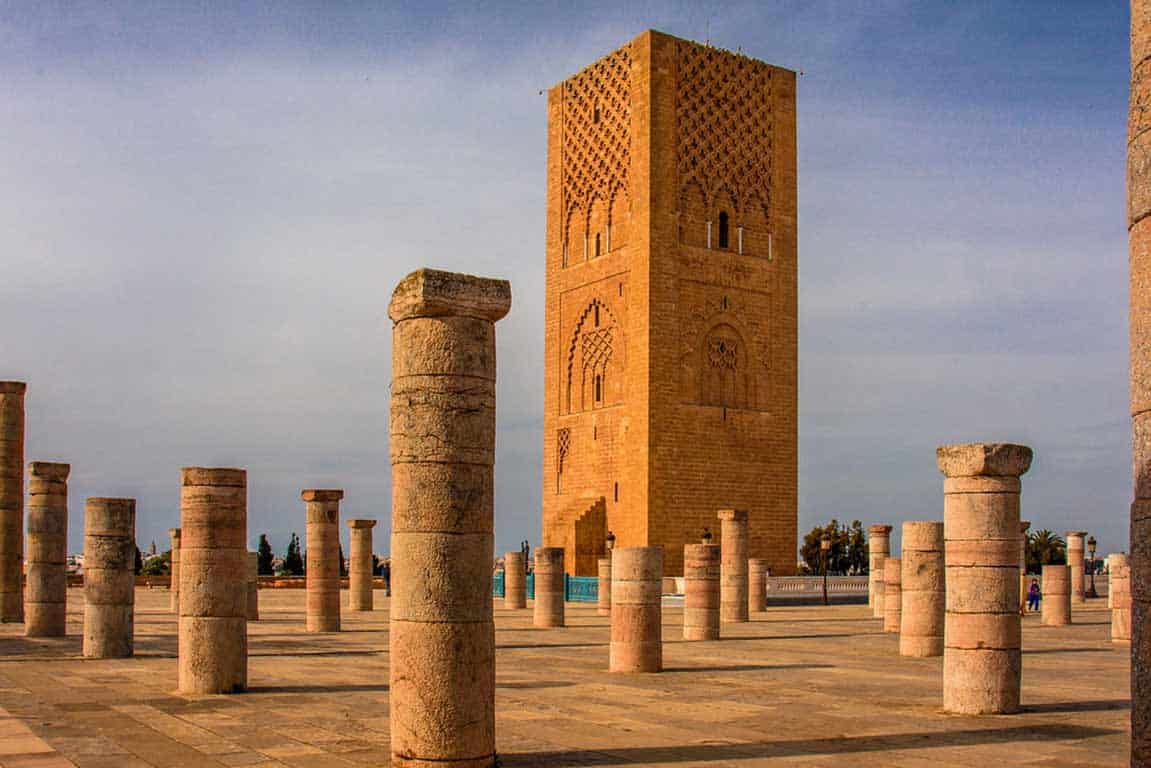
- Touring Rabat’s Medina and key attractions: the Hassan Tower, the Mohammed V Mausoleum
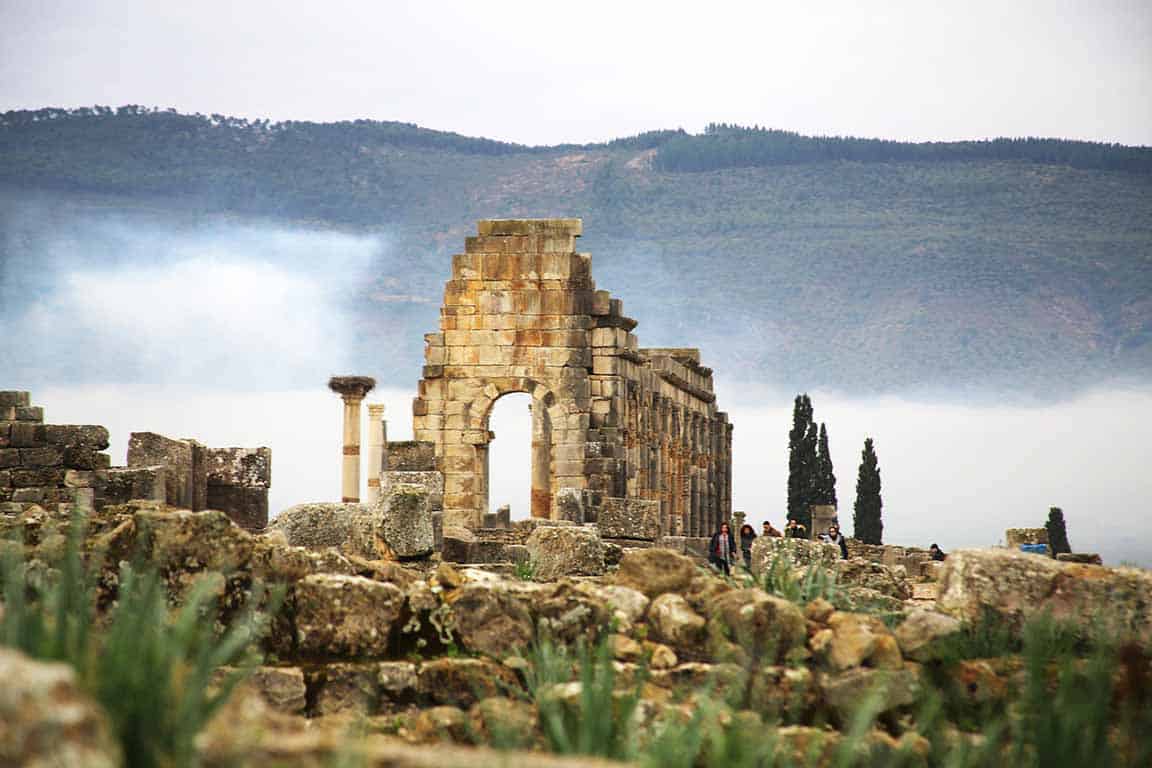
- Exploring the UNESCO Heritage Site, Volubilis Roman ruins and ancient walled medina of Meknes
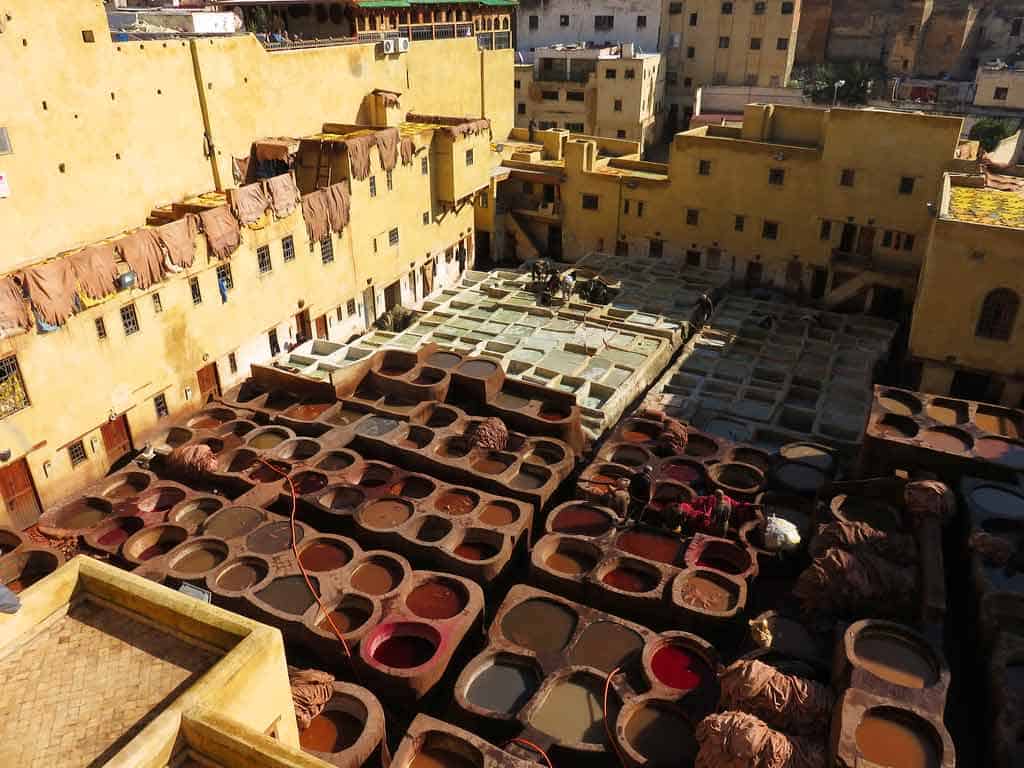
- Taking a full-day walking tour of Fes, visiting souks, tanneries, madrassahs, and mosques
- Riding camels at sunset, sandboarding, taking memorable photos & dancing to nomad music
- Admiring the grandeur of Morocco’s iconic Kasbahs: Ksar Aït Ben Haddou, Telouet, and Amredhil
- Marrakech sightseeing: vibrant souks, lush gardens, palaces, madrassahs, and Djemaa El Fna
- Discovering Morocco’s Amazigh culture, nomadic lifestyle, and scenic valleys, villages & mountains
What is included in this 10-day desert tour from Casablanca:
- Transport in a private air-conditioned vehicle; 4×4 Toyota Prado TX or deluxe van and fuel
- Pick-up from and drop-off at your hotel or riad and transfer from and to the airport
- Experienced local English/French/Spanish/Italian-speaking Berber and nomad driver-guide
- Accommodation in air-conditioned rooms/suites with private bathroom
- The night in a luxury camp in Erg Chebbi with a private toilet and shower
- All meals; (except lunch, and dinner in Casablanca, Rabat, Fes and Marrakech, and the journeys in between) – with vegetarian and vegan options available
- A camel ride with a guide. And if you wish to do some sandboarding, just speak to the camp staff!
- Option to go to and return from the camp by 4×4
- Luggage service to the camp and all accommodation
- Berber drumming and music
- Free time to explore the sites such as Aït Ben Haddou, for walks, photos, and tea/coffee breaks
- The opportunity to ask the driver to stop when and where you wish
- Entrance fees (except in Casablanca, Rabat, Meknes, Fes and Marrakech)
- Sightseeing with local tour guides in Fes and Marrakech
- Local guides in the relevant places
- Tea, coffee and mineral water in the desert
What is not included:
- Lunch and dinner in Casablanca, Rabat, Meknes, Fes, and Marrakech, or the journeys between the cities
- Entrance fees in Casablanca, Rabat, Meknes, Fes, and Marrakech
- Drinks
- Tips
- Extras
Good to know about the desert tour from Casablanca:
- You can customise the outlined trip to match your specific interests, with the option to include extra activities and day trips, ensuring a more personalised experience.
- Guided tours of the Hassan II mosque are limited on Fridays or religious holidays. Please check the schedule here: Hassan II Mosque Tours and Tickets
- You can buy entry tickets at each monument during your guided tour of Marrakech, but Majorelle Garden tickets must be booked online in advance
- According to weather conditions from May to the end of September, it may be necessary to find an alternative to the second day of trekking in the dunes
- If you want to go to Essaouira, please visit Imperial Cities, Desert, Atlantic, Casablanca Morocco Tours
- It is possible to choose to start and/or end this Morocco tour from Marrakech instead
- You can always consult your driver about skipping some places to spend more time elsewhere
- Here is a downloadable packing list to help plan for your Moroccan desert tour
- We require a 30% deposit of the total price to book the car, while the balance is payable to us in the office in Ouarzazate
- We accept payment through PayPal, bank transfers in Europe, by credit card, or cash (USD, Euro, GBP or MAD)
- We offer a 25% discount for children under 12, and one child under 3 per family travels free of charge
- Morocco desert tours from Casablanca 10 days prices are liable to fluctuation according to the current exchange rate
- Our prices can be subject to an increase over the busy season, and, in particular, the Christmas and New Year’s Eve period
Prices per person
| No Days | Meals |
|---|---|
| All-inclusive | |
| Total price | |
| 2 Persons |
|---|
| 1995 € * |
| 3990 € * |
| 3 Persons |
|---|
| 1965 € * |
| 5895 € * |
| 4 Persons |
|---|
| 1945 € * |
| 7780 € * |
| 5 Persons |
|---|
| 1845 € * |
| 9225 € * |
| 6 Persons |
|---|
| 1845 € * |
| 11070 € * |
Morocco desert tour from Casablanca – itinerary:
1st day: Casablanca – Rabat
Our driver will meet you at the airport and travel into the city of Casablanca with the first views of the Moroccan countryside. Here, you can visit Hassan II Mosque with restricted times on Fridays or religious holidays). This is the largest mosque in Africa and is decorated with beautiful tiling of the utmost craftsmanship. You may need to queue a while for tickets and the tour takes about an hour.
Continue to the capital city, Rabat, to spend the night in a riad. You may have time to wander around the medina and get a feel of this city.
FYI: Guided tours of the Hassan II mosque are limited on Fridays or religious holidays. Please check the schedule here: Hassan II Mosque Tours and Tickets
2nd day: Rabat – Fes
After breakfast in the riad, we visit the Hassan Tower and the Mausoleum of Mohammed V, built in homage to the king, Mohammed V, who passed away in 1961. His son and successor, Hassan II, who died in 1999, is also entombed here. The tile work inside the mausoleum is simply amazing, with every tiny tile cut and then set in place by hand. The guards’ uniforms are also really splendid.
North of Meknes, you can stop to visit Volubilis Roman ruins there, which are expansive and spread over a wide area. It is well worth hiring a local knowledgeable guide here. From the plain, there are beautiful views over the valley and hills. Continue to Fes for dinner and the night in a riad.
3rd day: Fes Sightseeing
After meeting your licensed local guide, enjoy a full-day sightseeing tour of Fes, the oldest of Morocco’s four “Imperial Cities.” This journey will take you to some of the most iconic and intriguing attractions, offering a deeper understanding of this ancient Moroccan gem.
You will visit the following places, according to time and your preferences:
The University of Al Quaraouiyine: Begin your exploration at the prestigious University of Al Quaraouiyine, renowned as one of the world’s oldest continuously operating educational institutions. Established in the 9th century, it holds a unique place in history as a hub of learning.
Bou Inania Medersa: Next, you will be able to visit the Bou Inania Medersa, a religious school celebrated for its stunning mosaics, exquisite stucco work, and detailed architecture. Here, you can admire the beauty of Islamic artistry in this historic setting.
The Royal Palace: Although not open to the public, the exterior of the Royal Palace is a masterpiece of Moroccan architecture. Why not stop here to appreciate the intricately designed portal, capturing the essence of Moroccan royalty?
The Medina: As you venture into Fes’ UNESCO-listed Medina, you will be immersed in its labyrinthine streets that have preserved their mediaeval charm. The bustling souks, ancient mosques, and historic landmarks offer a glimpse into the city’s vibrant past.
Leather Tanneries: Fes is renowned for its centuries-old leather production. At the tanneries, you can witness the traditional techniques employed in crafting leather goods, gaining insights into the city’s time-honoured craftsmanship.
Local Market: The vibrant markets of Fes, teem with life and offer a wide array of products, including souvenirs, textiles, spices, ceramics, wooden crafts, silver jewellery, and leather goods, displaying the diversity of Moroccan culture and artistry.
Nejjarine Museum of Wooden Arts and Crafts: Why not conclude your tour at the Nejjarine Museum, housed in a beautifully restored caravanserai? Here, you can discover a wealth of wooden arts and crafts integral to Moroccan culture. The museum’s exhibits provide an in-depth look at the intricate craftsmanship that defined Fes for generations.
Your sightseeing tour ends as your guide accompanies you back to your riad.
4th day: Fes – Merzouga
Departure from Fes at 8 o’clock, travelling past Ifrane, where the houses have sloping roofs, remarkable and unusual in Morocco. This is to cope with the yearly snowfall. Near Azrou, 1250m, with the geomorphologic Berber name meaning “rock”, you can see Barbary apes in the oak and cedar forests of the Middle Atlas.
From here we drive along the N13 south over the Middle Atlas, passing through Timahdite. This is another Berber name, and as the word begins and ends with the letter “t”, it signifies it is feminine.
We reach Midelt, 1508M, which is called “the apple capital” of Morocco and lies at the foot of the Ayachi Mountain. The town serves as the commercial agricultural centre for the surrounding area. It is also one of Morocco’s principal cities for the mining of several minerals, such as fluorite, vanadinite, quartz, and cerussite. This is where we will stop for lunch.
We continue south travelling over the Tizi-n-Talghemt pass, known as the “she-camel” pass. We descend through the Ziz Valley, which is particularly well-known for its palm trees and the length of the oasis. All along the road, there are innumerable “ksars”, small villages of individual houses. From here, we reach the mining town of Er Rachidia (e.g. copper and malachite) and then Erfoud, famous for its date festival and fossils. It is fascinating to see how these millions of fossils have been worked into artefacts. There is no obligation to buy anything in these shops!
You continue to Rissani and finally the famous red Erg Chebbi dunes in Merzouga. You take a camel ride, either setting out from the camp or to it. There is also the possibility to take the 4×4 to the camp.
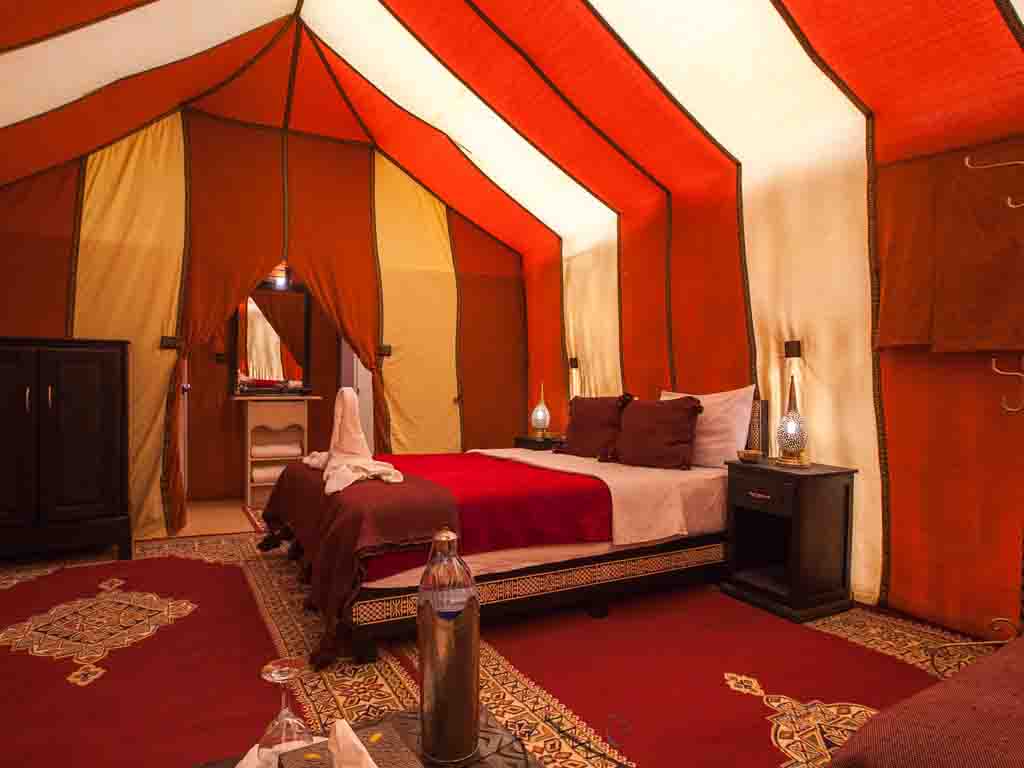
You have dinner and spend the night at a luxury camp with a private bathroom, king-sized beds, beautiful Moroccan furnishings and lamps tastefully arranged to enhance your enjoyment of the silence and beauty of the dunes.
5th day: Merzouga
After breakfast, you take the camels out into the dunes together with a camel man. You’ll walk up to three hours in the morning, followed by about the same amount of time in the afternoon. Lunch will be with nomads at their camp in the desert and you will return to the bivouac for dinner and the night.
Alternatively, after breakfast, you will explore the desert area more fully. First of all, you will visit the Gnawa people in the village of Khamlia. They specialize in Gnawa music brought from sub-Saharan Africa with the slave trade. They will play some typical music for you.
Afterwards, you will visit the old city of Rissani. This small town was the foundation of the Alaouite dynasty – the current ruling royal family in Morocco. It is surrounded by 360 ksars (a ksar is a fortified village with many towers) and has a large souk (an open market) held three times a week. Here you’ll walk through the souk, which sells spices, vegetables, household goods and handicrafts. Rissani has been built on the site of Sijilmassa, which was the meeting place for the salt caravans, coming from Timbuktu in Mali.
And then in the afternoon, you will mount your camel, and be led by an experienced camel man through the sand dunes of Erg Chebbi at Merzouga for an hour to an hour and a half to watch the sunset.
Weather conditions and temperatures in South Morocco are rarely stable. Should it become too hot from May through to the end of September, we may have to advise you not to attempt trekking in the dunes but to take this alternative instead.
6th day: Merzouga – Dades Gorges
If you wake up early enough, you can watch the spectacle of the sunrise, when the colour of the dunes and the play of shadows are an awesome sight. After breakfast at the camp, we leave for Tinghir and the Toudgha gorges.
On the way, you pass the water channels – “khettarat”. You can descend into them to appreciate the architecture and genius behind this form of irrigation which prevents evaporation in the summer heat. The channels start at a higher gradient at one end until they finally emerge at the surface of the soil. You can find out more about these channels by reading Andrew Wilson’s work.
In the gorge and the valley, there are opportunities to walk beyond the gorge itself or by the village gardens and fields before you reach it. Later the itinerary continues to the Dades Valley. The area, which now forms the Dades Gorges, lay at the bottom of the sea millions of years ago. Great quantities of sediment were deposited around giant coral reefs. Over time this material became compacted into a variety of sedimentary rocks such as sandstone and limestone. Eventually, the movement of the earth’s crust caused the region to rise above the sea, forming the Atlas Mountains and surrounding landscape. The night is spent in a hotel or kasbah.
7th day: Dades Gorges – Ouarzazate
After breakfast, a visit to the Dades gorges and a short walk there is scheduled. Later we go off-road along the Boutarar piste to visit Berber nomads in their caves and have tea with them. This visit makes it clear to the visitor just how hard nomadic existence is, trying to feed their goats and bring up their children.
From here we continue through the Valley of the Roses, famous for its Rose Festival in May. Cosmetics and toiletry items are produced and valued throughout the country. In Skoura and the oasis there, Kasbah Amredhil waits for a very worthwhile visit. The kasbah has been beautifully restored and gives a clear idea of life within such housing. It is made entirely of adobe, an excellent building material; warm in winter and cool in summer, due to the thickness of the walls.
45 minutes later you reach Ouarzazate, where you spend the night in a guest house.
8th day: Ouarzazate – Marrakech
After breakfast, the route goes on to Kasbah Aït ben Haddou, one of Morocco’s seven World Heritage sites, and the backdrop for many Hollywood blockbusters. It is the most famous Kasbah in Morocco and some of the buildings date back to the 17th century. From here you drive along the beautiful and awe-inspiring, winding Ounila Valley, full of surprises at the colours of the rock and soil and Berber villages and gardens.
Arriving at Kasbah Telouet, once home to the Lords of the Atlas, the Glaoui family, you will find that none of the three main buildings can be entered due to their dilapidated condition. The section of the Kasbah that was previously accessible is now closed following the damage from the September 2023 earthquake. However, the exterior is still worth exploring with a local guide to learn about its fascinating history.
At the end of the afternoon, having crossed the Tizi n’Tichka pass, we arrive in Marrakech.
9th day: Marrakech Sightseeing Tour
Marrakech is best known for its central Djemaa El Fna, bustling with juice stalls, dried fruit and nut vendors, henna artists, snake charmers, storytellers, and numerous nightly food stalls.
You can visit the following attractions according to your time and preferences:
The Majorelle Gardens: Designed by Jacques Majorelle and later owned by Yves Saint Laurent, this serene garden features fish pools, little bridges, paths, innumerable cacti, flowers, and trees. It also has a small Berber museum, a café and a restaurant serving delicious cuisine adapted from well-known Moroccan food. The garden is famous for its “Majorelle blue” pots, a striking colour replicated throughout the city.
Le Jardin Secret: Alternatively, you will be able to visit the Secret Garden, a true Islamic Paradise Garden, divided into four parts, each separated by a narrow water channel fed directly from the High Atlas. Walking through the gardens highlights the delicate simplicity of the colours in the planting, along with the calming sounds of its fountains. Displays and a video explain the reconstruction of this abandoned garden adored by the famous British gardener, Monty Don, in his documentary of Middle Eastern Paradise Gardens.
The Koutoubia Mosque: This is the city’s landmark and the largest mosque in Marrakech, whose name comes from “al-Koutoubiyyin,” referring to its history as a hub for bookshops. The mosque, built in the traditional Almohad style, has a 69-metre tower adorned with four copper globes.
El Bahia Palace: Built for Ahmed Ibn Moussa, who was the Grand Vizier of Morocco, between 1894 and 1900 in the Alaoui style, this palace features 160 rooms around courtyards, with stucco panels, zellij decorations, tiled floors, carved cedar ceilings, and marble finishes. It is surrounded by an eight-hectare garden.
Ben Youssef Medersa: A Quranic school founded by Sultan Abou el Hassan (1331–49) and rebuilt in the 1560s under the Saadians. It housed around 800 students who memorised the Quran. The building showcases Moroccan architectural styles with zellij tiling, stucco plasterwork, and carved cedar wood.
The Saadian Tombs: Dating back to Sultan Ahmad al-Mansur (1578-1603) and rediscovered in 1917. The mausoleum is the final resting place for about sixty members of the Saadi Dynasty and is a major attraction.
The Jewish Mellah: All Moroccan cities have a Jewish quarter and many synagogues are still standing, though far fewer are still in use. There are even Jewish quarters in small villages throughout the country, often forgotten. The Mellah district in Marrakech was an area inhabited by all non-Muslims, not only Jews.
The Souks: The vibrant heart of Marrakech, offering a variety of handicrafts, spices, traditional medicines, and more. Visitors can find Moroccan slippers (babouches), leather goods, textiles, pottery, and silver jewellery, and try bargaining for a real bargain.
FYI: You can buy entry tickets at each monument during your guided tour of Marrakech, but Majorelle Garden tickets must be booked online in advance.
Tip: If you would prefer a traditional Moroccan cooking class instead of a tour of Marrakech, we would be happy to organise this for you for an additional fee.
You will spend the night in a riad.
10th day: Marrakech – Casablanca
Transfer from your riad to Casablanca airport in time for the check-in before your flight. Your wonderful desert Tours from Casablanca adventure ends as your driver escorts you to the airport.
Map of Desert Tours from Casablanca:
